2000 Ford Focus Drive Belt Diagram and Routing Guide
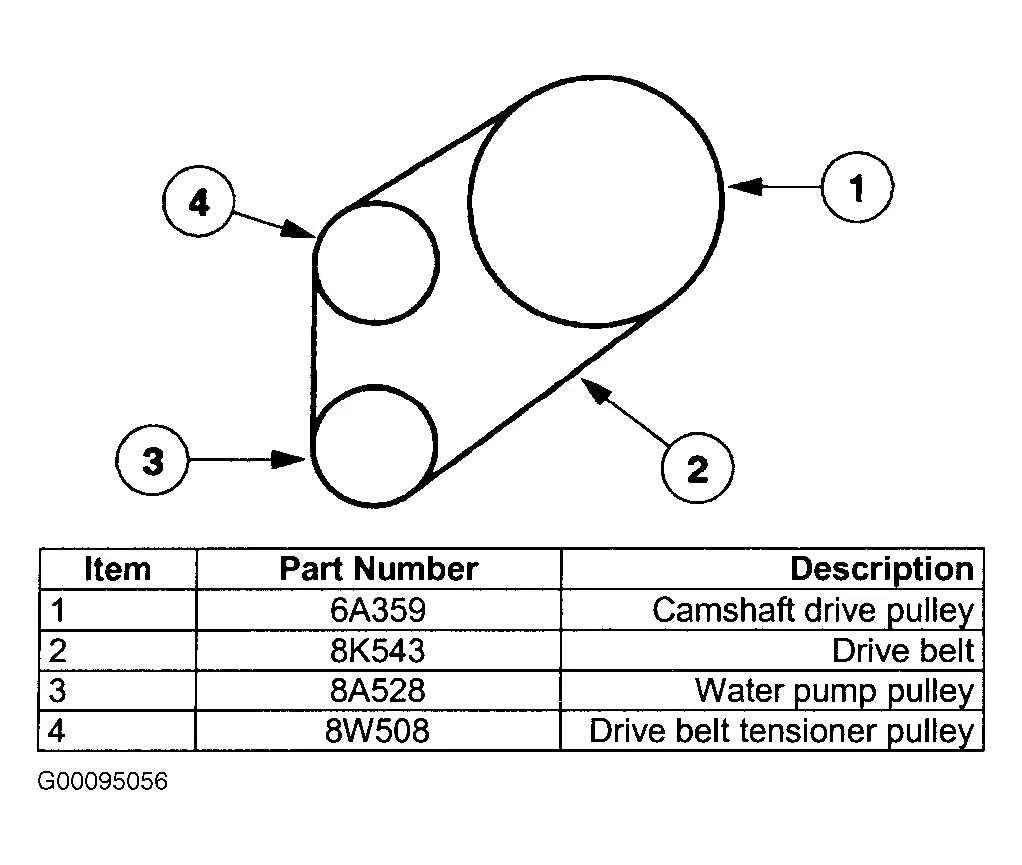
To replace the drive belt on your 2000 Ford Focus, start by identifying the correct belt routing diagram for your vehicle. This diagram will guide you through the precise path the belt should take, ensuring proper tension and operation of all the components. Look for the belt routing label, typically found on the engine compartment’s fan shroud or radiator support.
Ensure that the belt is properly aligned with all pulleys to avoid premature wear or slippage. The drive belt powers multiple engine components, including the alternator, power steering pump, and air conditioning compressor. If the belt appears frayed, cracked, or damaged, it should be replaced immediately to prevent any malfunction.
When replacing the drive belt, check the condition of each pulley and tensioner. Worn pulleys can cause misalignment, leading to additional strain on the new belt. If necessary, replace any faulty components before installing the new belt to ensure smooth operation and extend the lifespan of your drive system.
2000 Ford Focus Drive Belt Diagram
The 2000 Ford Focus uses a serpentine drive belt that connects several engine components. Understanding its routing and how each part is powered will help with maintenance and repairs. The belt drives components such as the alternator, power steering pump, water pump, and air conditioning compressor.
First, verify the condition of the belt before performing any work. Look for signs of cracking, fraying, or wear. A damaged belt can lead to engine failure or the loss of critical functions. If you notice any issues, replace the belt as soon as possible.
The diagram for the 2000 Ford Focus shows the belt routing, starting from the crankshaft pulley. The belt loops around the alternator pulley, then to the power steering pump, and next to the air conditioning compressor. It finally loops around the water pump pulley before returning to the crankshaft pulley. Make sure to follow the exact belt path for proper installation.
- Check the tensioner for proper tension. A loose or worn tensioner can cause the belt to slip.
- Use a diagram to ensure correct belt placement during installation.
- Consider replacing the belt every 60,000 miles or if you notice significant wear.
If replacing the belt yourself, follow these steps:
- Remove any obstacles that block access to the drive belt.
- Use a wrench to relieve tension on the belt tensioner.
- Carefully remove the old belt and inspect the pulleys for damage or wear.
- Install the new belt, following the diagram for proper routing.
- Test the installation by turning the engine over to ensure the belt is running smoothly.
Maintaining the drive belt in good condition ensures that all engine systems run efficiently and prevents unexpected failures. Refer to the diagram for precise details to guide your maintenance or replacement work.
Identifying Components in the 2000 Ford Focus Drive Belt System
The drive belt system in the 2000 Ford Focus consists of several key components, each performing a specific function. The main parts include the serpentine belt, the tensioner, and the pulleys. Start by inspecting the serpentine belt, which connects various accessories such as the alternator, power steering pump, air conditioning compressor, and water pump. Check for signs of wear, cracks, or fraying along the belt’s surface.
The tensioner is responsible for maintaining the proper tension on the serpentine belt. Over time, the tensioner can wear out, causing the belt to slip or become loose. Inspect the tensioner for any signs of damage or excessive movement. It is important to replace the tensioner if it is not holding the belt with the correct tension.
The pulleys guide the belt along its path, ensuring it stays in place and operates the accessories smoothly. These include the crankshaft pulley, the idler pulley, and the accessory pulleys. Check each pulley for smooth rotation and any signs of wear or misalignment. A misaligned pulley can cause premature belt damage and failure.
Proper maintenance of the drive belt system requires regular inspection of these components. Replace any worn-out or damaged parts promptly to avoid more costly repairs down the line.
Step-by-Step Process for Replacing the Drive Belt on a 2000 Ford Focus
1. Disconnect the Battery: Begin by disconnecting the negative terminal of the battery to avoid any electrical accidents while working on the vehicle.
2. Raise the Car: Lift the front of the car using a jack, then secure it with jack stands to ensure safety while working underneath the vehicle.
3. Locate the Drive Belt: Identify the drive belt and components. The 2000 Ford Focus typically uses a serpentine belt. Find the belt tensioner and pulleys for a clear view.
4. Release Tension from the Belt: Use a ratchet wrench or a serpentine belt tool to rotate the belt tensioner. This will release the tension on the belt. Once the tension is off, remove the belt from the pulleys.
5. Inspect the Components: Before installing a new belt, check the pulleys, tensioner, and other components for wear or damage. Replace any worn-out parts as needed to ensure smooth operation of the new belt.
6. Install the New Belt: Route the new drive belt around the pulleys according to the vehicle’s belt diagram. Make sure the belt is properly seated in each groove and aligned with the pulleys.
7. Apply Tension: Use the ratchet wrench or serpentine belt tool again to move the tensioner and install the belt with proper tension. Ensure the belt is tight enough to prevent slipping but not over-tightened.
8. Recheck the Belt Alignment: After the belt is in place, rotate the engine by hand or use the key to start the engine briefly. This will allow you to check that the belt is properly aligned and runs smoothly without making unusual noises.
9. Reconnect the Battery: Once the belt is installed and properly adjusted, reconnect the negative terminal of the battery. Ensure all tools are removed from under the vehicle.
10. Test the Vehicle: Start the engine and observe the belt operation. Listen for any squealing or misalignment, which could indicate improper installation or tension. If everything runs smoothly, the replacement is complete.
Troubleshooting Common Issues with the Drive Belt on a 2000 Ford Focus
If the drive belt on your 2000 Ford Focus is slipping, first check the tension. A loose belt will cause it to slip and produce a squealing sound. Tighten the belt by adjusting the tensioner pulley. If the noise persists, inspect the belt for wear or damage. Cracks, fraying, or glazing are signs that the belt needs replacing.
If the belt is not tracking correctly, it may be misaligned. Check the pulleys for any signs of wear or misalignment. Ensure the tensioner pulley is operating smoothly. A worn-out tensioner can cause the belt to slip off its proper alignment. Replace any faulty pulleys as needed.
If the vehicle experiences power loss or a warning light appears, it could indicate that the drive belt is not driving the alternator or power steering pump properly. Inspect the belt for signs of looseness or wear. If the belt is intact, check the pulleys and tensioner for smooth operation. A faulty pulley or tensioner may need to be replaced.
In some cases, the drive belt may break entirely. If this happens, replace the belt immediately with a new one that matches the specifications for your Ford Focus. While replacing the belt, inspect all related components to prevent future issues.