Infiniti Q50 serpentine belt diagram with pulley routing and replacement reference
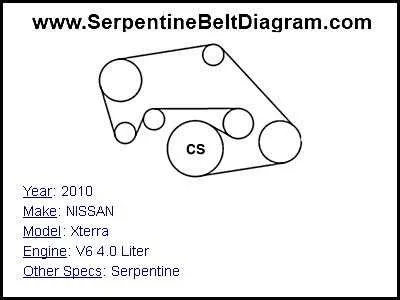
Check the routing diagram before removing the serpentine belt on the Infiniti Q50. The belt runs around the crankshaft pulley, alternator, water pump, power steering pump, and air conditioning compressor. A misaligned installation may cause noise, premature wear, or damage to accessories.
Use a breaker bar on the tensioner pulley to release pressure and slide the belt off safely. Take a clear photo of the belt path or keep the factory diagram close to avoid mistakes during reinstallation. Never force the belt into position; if it feels too tight, verify the routing path first.
Inspect the belt for cracks, fraying, or missing ribs before installing a new one. A worn tensioner or pulley may cause squealing or slippage, so check these parts during replacement. Replacing the serpentine belt on time keeps the Q50’s engine accessories operating smoothly and prevents sudden breakdowns on the road.
Infiniti Q50 Serpentine Belt Diagram
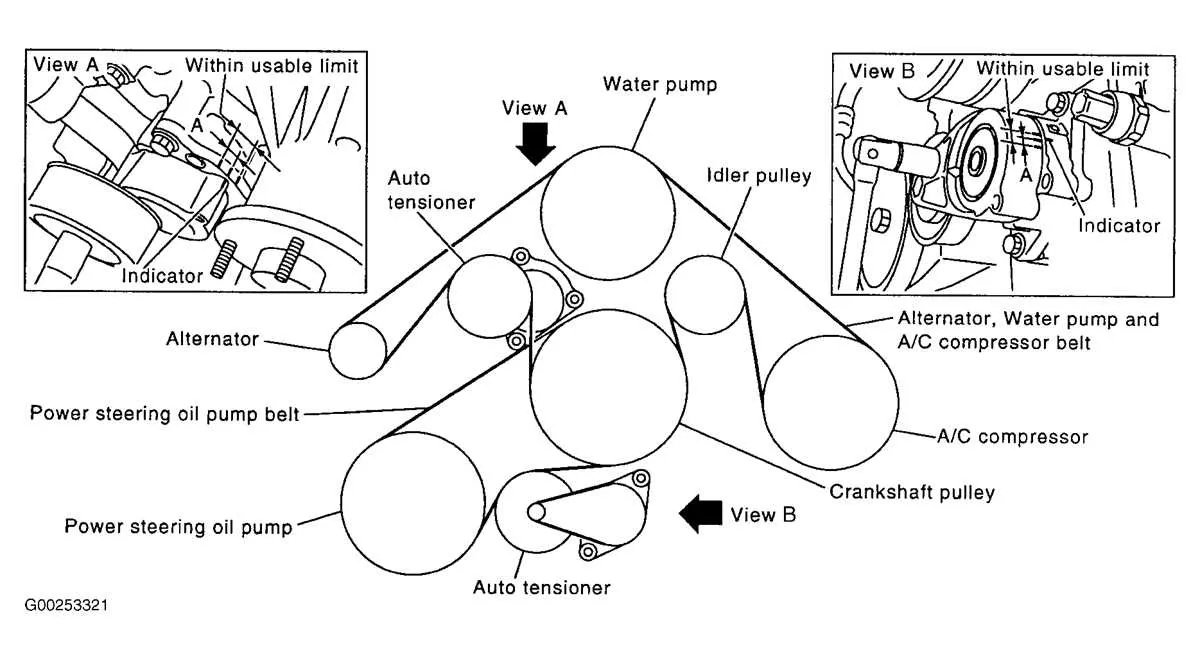
Check the routing diagram under the hood before removing the old serpentine belt on the Infiniti Q50. This diagram shows the exact path the belt follows across the alternator, water pump, power steering pump, and air conditioning compressor. Using the correct path prevents misalignment and uneven tension.
On most Q50 models, the belt wraps around the crankshaft pulley first, then loops across the alternator and tensioner before reaching the accessories. A clear diagram helps avoid incorrect installation, which can cause squealing or premature wear.
If the factory sticker is missing, refer to a verified diagram for your engine type. The 3.7L V6 and the 3.0L twin-turbo use slightly different layouts, so confirm the correct version before replacing the belt. A printed copy of the routing diagram nearby will save time during installation.
Identifying the Correct Serpentine Belt for Infiniti Q50 Models
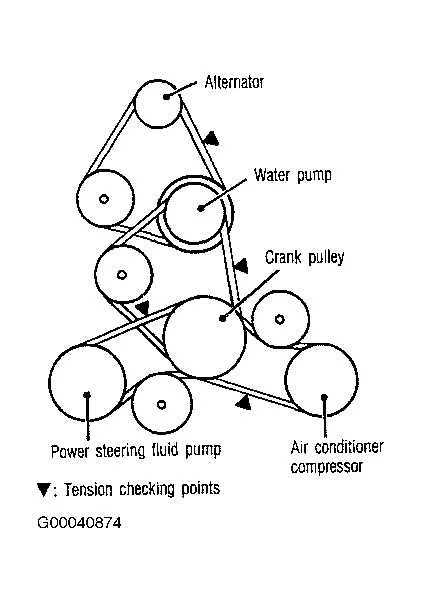
Check the engine type before buying a replacement belt. Infiniti Q50 models use different belts depending on whether the vehicle has the 2.0L turbo, 3.0L twin-turbo V6, or the 3.7L V6 engine. Each version requires a belt with specific length and rib count.
- 2.0L Turbo (2016–2019): Belt length around 84 inches with 6 ribs.
- 3.0L Twin-Turbo V6 (2016–present): Belt length around 94 inches with 6 ribs.
- 3.7L V6 (2014–2015): Belt length around 93 inches with 7 ribs.
Use the VIN when ordering parts to avoid mismatches, as certain production years share engines but have different belt routing. Cross-reference the OEM number with aftermarket catalogs to confirm compatibility.
Inspect the tensioner and pulleys while replacing the belt, since worn components can shorten the life of a new belt. Replace any pulley that feels rough when rotated or shows visible damage.
Step-by-Step Routing Guide for the Q50 Serpentine Belt
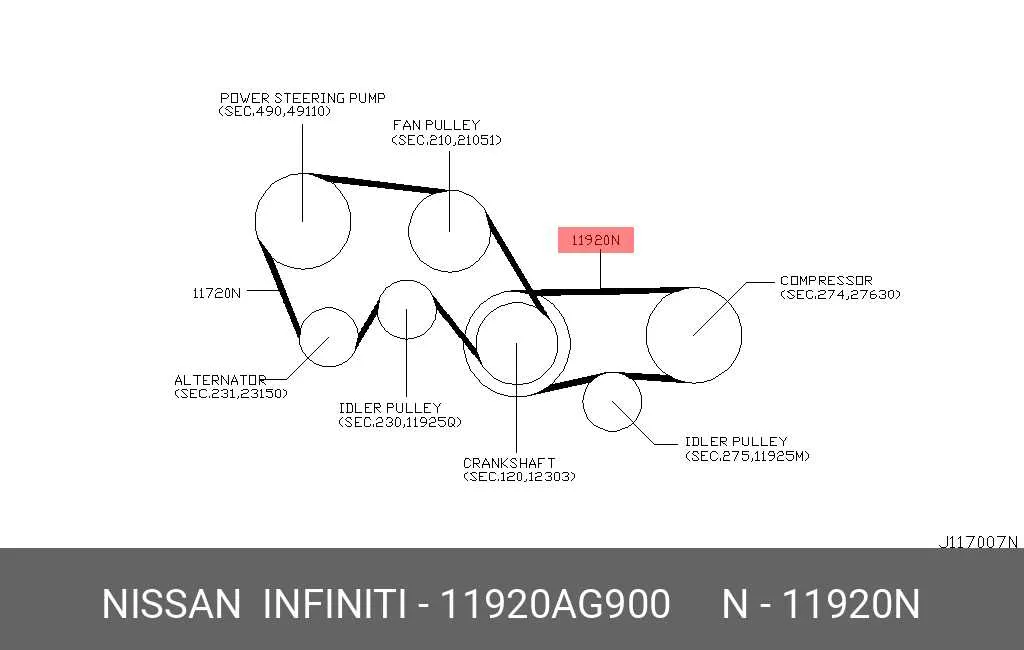
Route the belt around the crankshaft pulley first, as it provides the main drive. Keep the belt tight on this pulley before moving to the next component.
Continue by looping the belt around the water pump pulley. Ensure it sits evenly in the grooves and does not twist during placement.
Next, position the belt over the alternator pulley. Pull it firmly into the track to avoid slippage during operation.
Guide the belt around the power steering pump pulley. Maintain consistent tension so the belt remains aligned with adjacent pulleys.
Wrap the belt around the A/C compressor pulley. Confirm it rests flush with the pulley edges without any gaps.
Finally, route the belt over the tensioner pulley. Use a breaker bar or ratchet to rotate the tensioner, slide the belt into place, and slowly release the tensioner to secure it.
After placement, inspect the entire routing path. Confirm the belt aligns correctly with all grooves, and adjust if necessary before starting the engine.
Common Issues Caused by Incorrect Belt Installation on Infiniti Q50
Install the serpentine belt with proper alignment to prevent squealing noises. A belt that rides off-center on the pulleys creates friction, which quickly wears the edges and produces high-pitched sounds during acceleration.
A misrouted belt often reduces alternator output. If the belt skips the correct path around the alternator pulley, the charging system may fail, leading to dim headlights, warning lights on the dashboard, or even battery drain while driving.
Incorrect tension can damage the power steering pump. Too much slack causes slipping, reducing steering assist, while excess tension strains the pump bearings and shortens their lifespan. Always verify the tensioner arm sits in the proper range after installation.
The air conditioning compressor can also suffer from misalignment. A twisted or overtightened belt stresses the clutch mechanism, causing vibration and premature failure of the compressor. If you notice inconsistent cooling or loud clicking from the A/C system, recheck the routing.
Engine overheating may occur if the water pump pulley does not rotate at the correct speed. Even a small routing error can reduce coolant circulation, leading to temperature spikes under load. Confirm that the belt follows the diagram to keep the cooling system stable.
To avoid repeated damage, use a routing diagram specific to the Infiniti Q50 engine variant and inspect pulley grooves for dirt or wear before fitting the new belt. Proper installation prevents unnecessary repairs and ensures consistent accessory performance.