2005 Nissan Pathfinder serpentine belt routing diagram for engine components
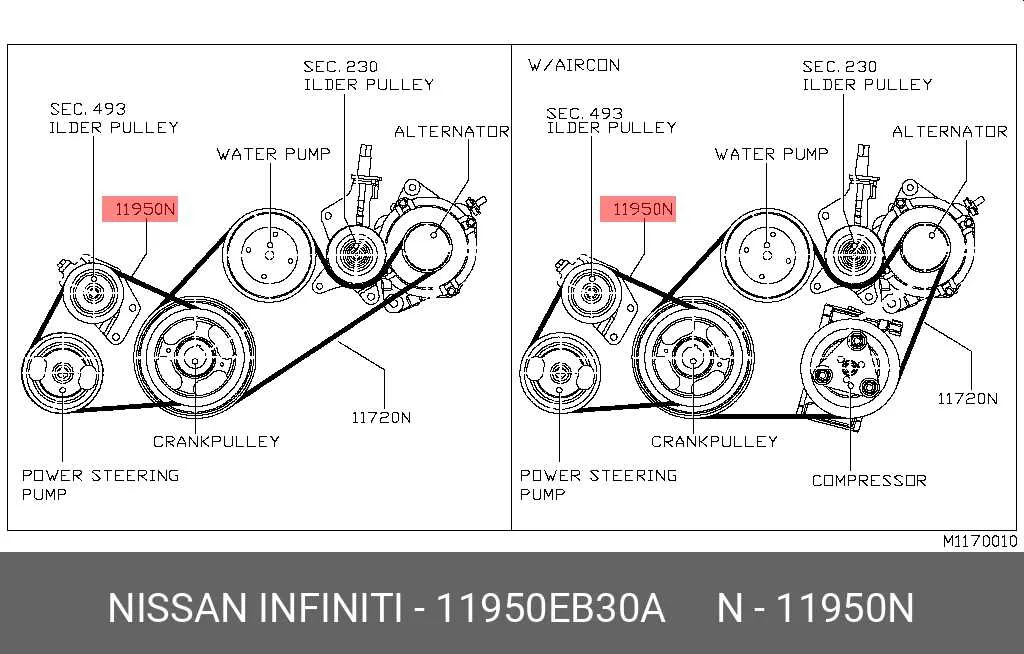
Locate the serpentine belt routing immediately under the hood to ensure correct installation. For the 2005 Nissan Pathfinder, the belt drives the alternator, power steering pump, air conditioning compressor, and water pump. Misalignment can lead to premature wear or engine overheating, so following the exact diagram is key.
Identify each pulley carefully before removing the old belt. Start with the tensioner pulley, which must be released to slip off the worn belt. Keep the routing diagram in view while handling the belt, noting the direction of rotation for smooth reinstallation.
Confirm the belt type and size. The 2005 Pathfinder typically uses a multi-rib serpentine belt, commonly labeled 6PK1820 or equivalent. Using the wrong size can reduce performance and stress components, especially the tensioner and alternator bearings.
Check the belt path against the diagram during installation. Begin with the crankshaft pulley and continue to each accessory in sequence. Verify tension on the belt once mounted, ensuring the tensioner applies proper pressure without over-tightening.
Inspect adjacent components while replacing the belt. Look for cracks, worn pulleys, or fluid leaks that could damage the new belt. Replacing any compromised parts simultaneously prevents repeated labor and extends the belt’s service life.
2005 Nissan Pathfinder Serpentine Belt Diagram
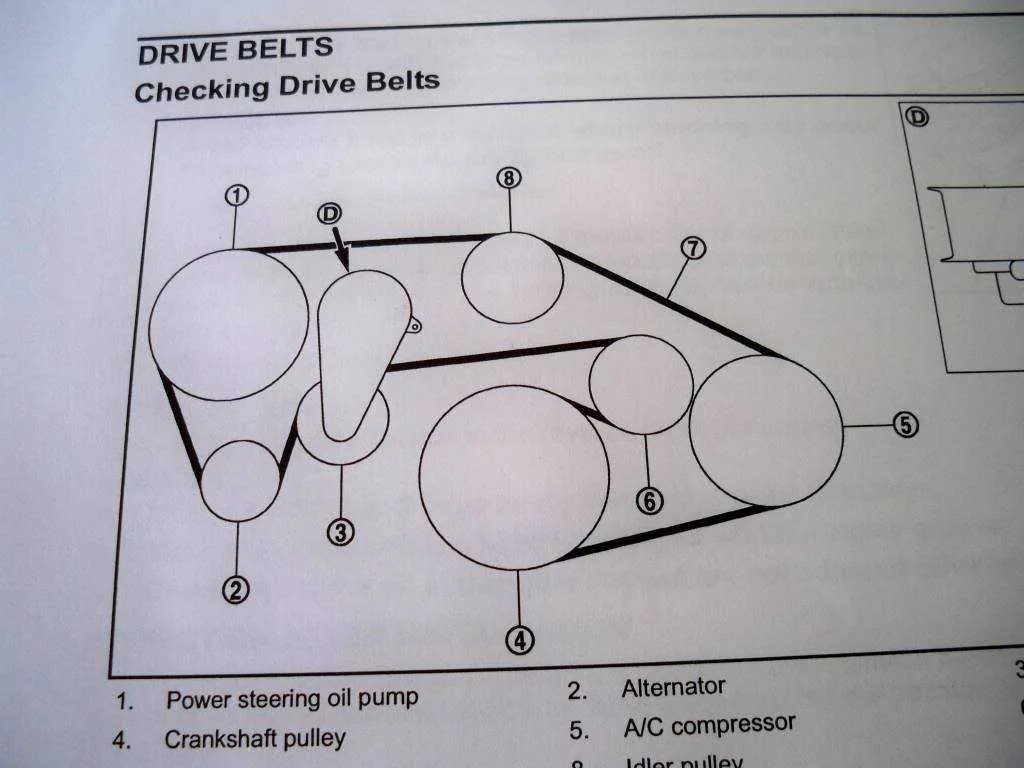
Follow this layout to replace or inspect the serpentine belt on a 2005 Nissan Pathfinder with the V6 engine. Proper routing prevents premature wear and ensures all accessories function smoothly.
Use the diagram below as a guide for correct belt positioning:
- Crankshaft Pulley: Drives the entire belt system. Position belt snugly around this pulley first.
- Alternator: Located at the top-left; ensure belt wraps around it without slack.
- Power Steering Pump: Upper-right side; belt should make a full contact with pulley grooves.
- Air Conditioning Compressor: Bottom-left; belt alignment must prevent slipping.
- Tensioner Pulley: Spring-loaded, near center; use a wrench to rotate and fit belt properly.
- Idler Pulley: Adjust belt path to maintain tension and avoid misalignment.
Step-by-step approach for belt replacement:
- Release tension using a 14mm or 15mm wrench on the tensioner pulley.
- Remove the old belt and compare it with the new one to confirm length and groove pattern.
- Route the new belt around the crankshaft pulley, then follow the diagram for alternator, AC compressor, and power steering pulleys.
- Rotate the tensioner to slide the belt over the tensioner pulley.
- Check alignment along all pulleys and ensure no twisting or slack.
- Start engine briefly to verify smooth operation and correct routing.
Mark the diagram or take a photo before removing the old belt to simplify reinstallation. Inspect pulleys and tensioner for wear while replacing the belt. Replace any worn components to extend belt life and maintain engine performance.
Locate and Identify Each Pulley on the Serpentine Belt
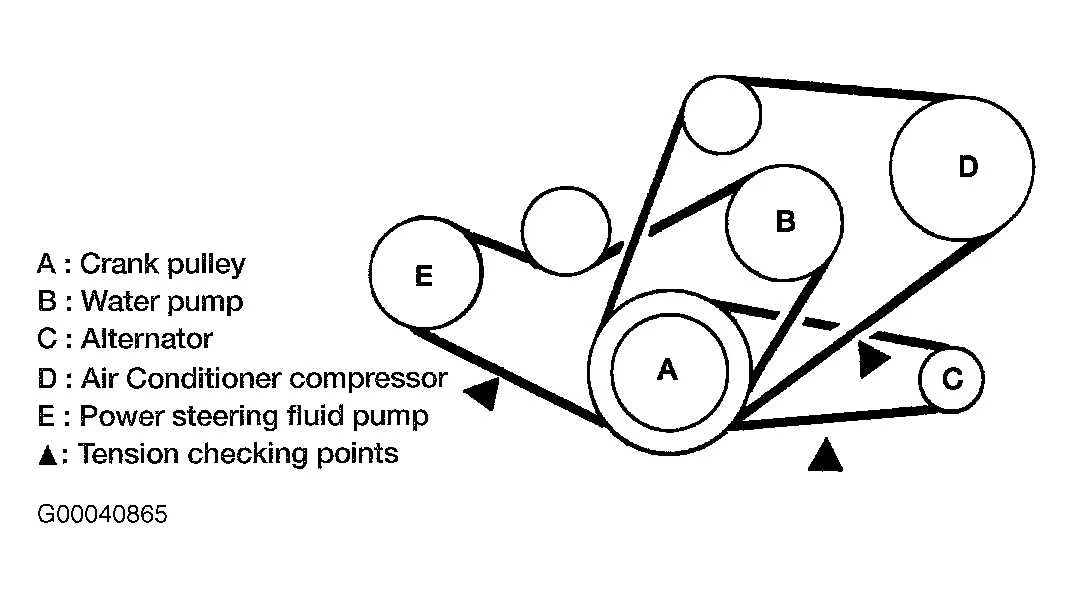
Begin with the crankshaft pulley at the bottom center of the engine; it drives the entire serpentine system. Directly above, find the alternator pulley, typically on the passenger side, slightly angled toward the front. The power steering pump pulley sits on the driver’s side, easily recognizable by its larger diameter and smooth surface.
Next, locate the water pump pulley, positioned near the center of the engine, often behind the crankshaft pulley, with visible mounting bolts around its edge. The tensioner pulley can be found near the front, slightly offset, featuring a spring-loaded arm that maintains belt tension. The idler pulley is smaller, free-spinning, and positioned to guide the belt around tight corners, usually near the top of the engine bay.
Trace the belt path from the crankshaft to each accessory, noting the direction of rotation indicated by arrows on some pulleys. Check each pulley for alignment and signs of wear, such as grooves, rust, or wobble. Using a flashlight helps distinguish between the smooth idler surfaces and the ribbed grooves on the alternator, water pump, and power steering pulleys.
Marking each pulley’s position on a diagram or taking a photo before removing the belt reduces errors during reinstallation. Move the belt manually around each pulley to confirm correct positioning and smooth engagement with all grooves. This step ensures the serpentine belt operates without slipping or premature wear.
Step-by-Step Belt Removal and Replacement Procedure
Disconnect the battery before touching the serpentine belt to prevent accidental engine start. Use a 12mm wrench to loosen the negative terminal and secure it away from the battery post.
Locate the tensioner pulley on the front of the engine. Insert a 3/8-inch ratchet into the square hole of the tensioner arm and rotate it clockwise to relieve tension. Keep control of the ratchet as the spring-loaded tensioner can snap back quickly.
Slide the belt off the pulleys one at a time, noting the routing. Use a printed diagram or mark the belt path with chalk if needed. Do not force the belt over pulleys; gently wiggle it to avoid damaging bearings.
Inspect all pulleys for wear, misalignment, or rough rotation. Spin each idler and tensioner pulley by hand; replace any that produce grinding noise or excessive play. A smooth pulley operation extends belt life.
Position the new belt around the crankshaft pulley first, then follow the routing to the alternator, water pump, power steering, and A/C compressor. Ensure the belt sits fully in the pulley grooves and is not twisted.
Release the tensioner slowly, allowing it to apply proper tension on the new belt. Double-check the belt alignment on each pulley, confirming that it matches the diagram.
Reconnect the battery and start the engine. Observe the belt for a few minutes to ensure it tracks correctly without slipping, squealing, or vibrating. Tighten any components if necessary.
Troubleshooting Common Belt Alignment and Tension Issues
Check the belt routing carefully against the 2005 Nissan Pathfinder serpentine belt diagram to spot any misalignment. Misaligned belts often produce a squealing noise under acceleration or when starting the engine. Use a straight edge across pulleys to confirm they sit on the same plane; adjust the alternator or power steering pulley if needed.
Inspect the belt tension by pressing midway between pulleys. A properly tensioned belt should deflect about half an inch. Excessive slack causes slipping and noise, while over-tensioning stresses bearings. Use a tension gauge for accurate measurement if available, or adjust the automatic tensioner to maintain consistent pressure.
Look for uneven wear patterns on the belt’s ribbed surface. Fraying, cracking, or glazing indicates alignment issues or pulleys that are worn or seized. Replace damaged belts immediately and check each pulley for smooth rotation. Tighten loose mounting bolts and clean any debris from pulley grooves to prevent premature belt failure.
Rotate the engine manually with a wrench to observe belt movement. Any lateral wobble or mis-tracking signals a pulley misalignment. Adjust pulley positions slightly or replace bent pulleys to correct tracking. Retest tension and alignment after every adjustment to ensure smooth operation across all accessory drives.
Monitor belt performance over the first few hundred miles after adjustments. Persistent squealing or vibration often points to a hidden issue, such as a failing tensioner spring or bearing. Replace any faulty components promptly to maintain engine reliability and prevent accessory damage.