Chevy 350 V-Belt Routing Diagram Without AC for Classic Small Block Engines
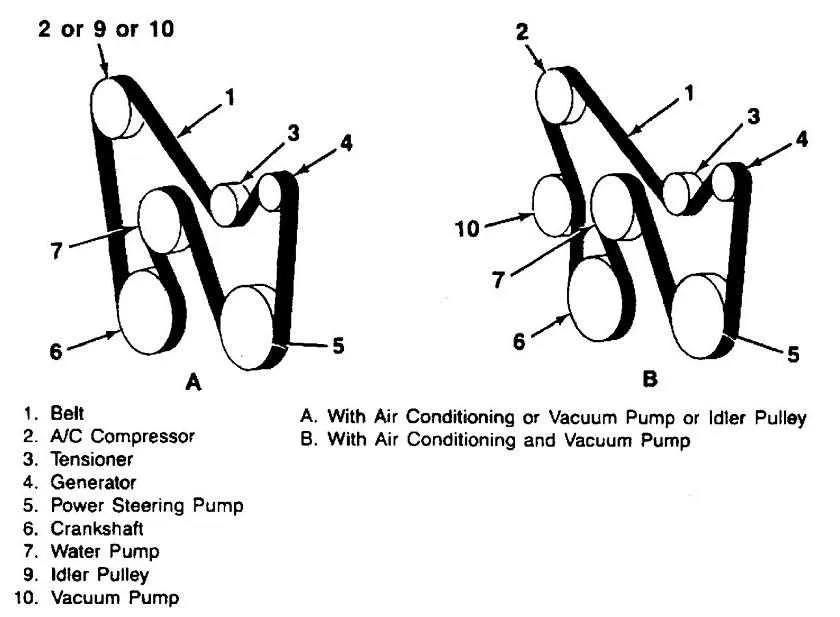
Route the v-belt on a Chevy 350 without AC by looping it from the crankshaft pulley directly to the water pump, then to the alternator. This setup eliminates the compressor bracket entirely and simplifies the accessory drive layout.
Use a shorter belt–typically around 44 to 46 inches–depending on your alternator bracket and pulley size. Measure the path manually with a flexible tape if your bracket position differs from stock. A Dayco 15445 or Gates 7440 belt fits most factory-style setups without AC.
Tension the belt by pivoting the alternator outward before tightening the mounting bolt. Ensure around ½ inch of belt deflection at the longest span. Over-tightening can wear bearings; under-tightening causes slippage and charging issues.
If running power steering, the second belt wraps from the crankshaft to the power steering pump. This setup is separate and does not interfere with the alternator belt path. Use a belt matched to your pump bracket–typically Dayco 15395 or similar for stock configurations.
Chevy 350 V-Belt Diagram No AC
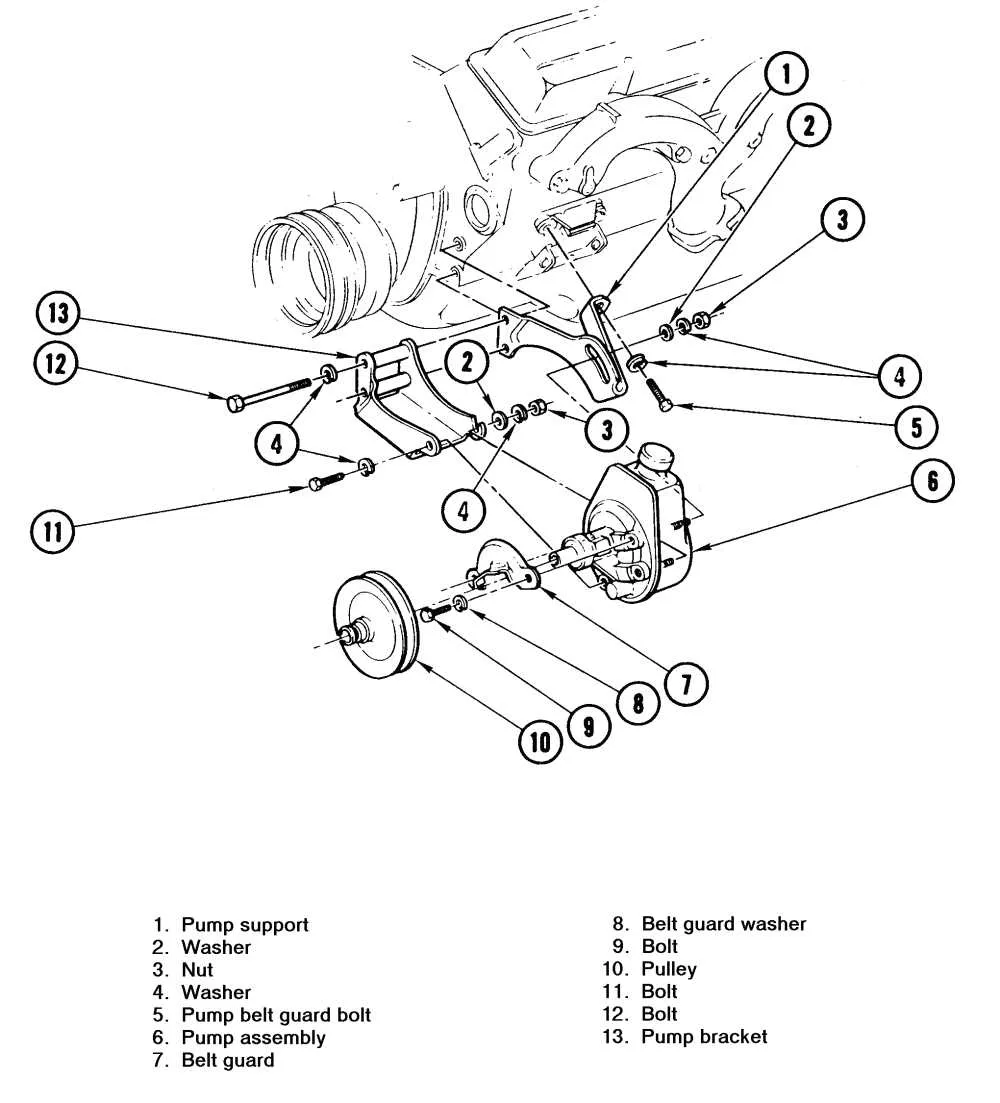
Route the v-belt from the crankshaft pulley directly to the water pump and then to the alternator. With no AC and no smog pump, this simple setup uses a single belt to drive the water pump and alternator.
Make sure the crankshaft pulley has a dual-groove if you’re running power steering. In that case, the second belt will go from the crankshaft to the power steering pump only. If there’s no power steering, a single-groove pulley is enough.
Use a short water pump (SBC short-style) to match pulley alignment. The alternator mounts on the passenger side using a bracket that attaches to the intake and water pump bolts. Keep the belt tight enough to prevent squealing but not so tight it stresses bearings.
Check pulley alignment visually from above and adjust brackets if the belt tracks off-center. Use a straightedge if needed. If the belt walks off under load, double-check all pulleys for wobble or misalignment.
Stick with OEM-style stamped steel pulleys unless running high-RPM. Aftermarket aluminum pulleys often change spacing and may require shim kits.
How to Route a V-Belt on a Chevy 350 Without AC Compressor
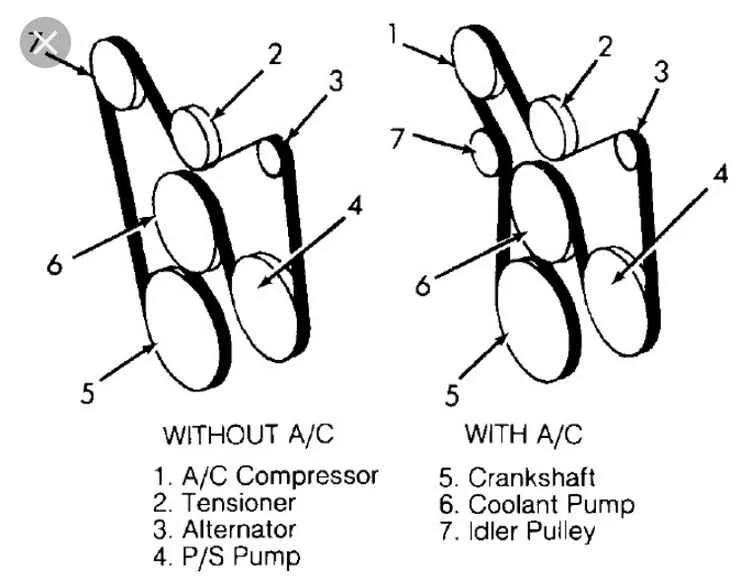
Route the V-belt starting from the crankshaft pulley, then loop it over the water pump pulley, and finally over the alternator pulley. Without the AC compressor, the belt follows a simple path connecting only these three pulleys.
Follow these steps for correct installation:
- Place the belt on the crankshaft pulley first, ensuring it seats fully in the groove.
- Pull the belt up and over the water pump pulley, keeping tension to avoid slack.
- Stretch the belt over the alternator pulley. Use a pry bar or belt tensioner to adjust and maintain proper tension.
- Double-check that the belt sits evenly in all pulley grooves without twisting or misalignment.
Ensure the belt tension ranges between 1/2 inch to 3/4 inch of deflection when pressed midway between the crankshaft and alternator pulleys. Too loose or too tight tension can cause premature wear or belt slippage.
For reference, the belt size for a Chevy 350 without AC usually measures 5/8 inch wide and approximately 74 inches in length, but verify your specific application before purchase.
Regularly inspect the belt for cracks, glazing, or fraying to maintain reliable performance and avoid unexpected breakdowns.
Correct Pulley Configuration for Chevy 350 with No Air Conditioning
Use a single V-belt setup that connects the crankshaft pulley directly to the water pump and alternator pulleys. The crankshaft pulley should be a standard diameter, typically around 6.5 inches, to maintain proper belt tension and speed ratio.
The water pump pulley must match the alternator pulley size, usually around 5.5 inches, ensuring synchronized rotation without the air conditioning compressor pulley. Avoid mixing pulleys designed for AC-equipped engines, as their different diameters can cause improper belt tracking and premature wear.
Install an adjustable tensioner bracket or use a manual adjustment on the alternator mount to maintain optimal belt tension. A tension range of 1/2 inch deflection at mid-span works well for this configuration. Check alignment carefully to prevent belt slippage and extend belt life.
Confirm that the belt length corresponds to a no-AC setup, generally around 38 to 40 inches depending on the pulley diameters. Using a belt designed for an AC system will be too long and lead to slack.
Keep pulleys clean and free from rust or damage to prevent belt noise and premature failure. Replace worn or glazed belts with high-quality V-belts rated for engine accessory drives.
Tensioning the V-Belt Properly on a Non-AC Chevy 350 Setup
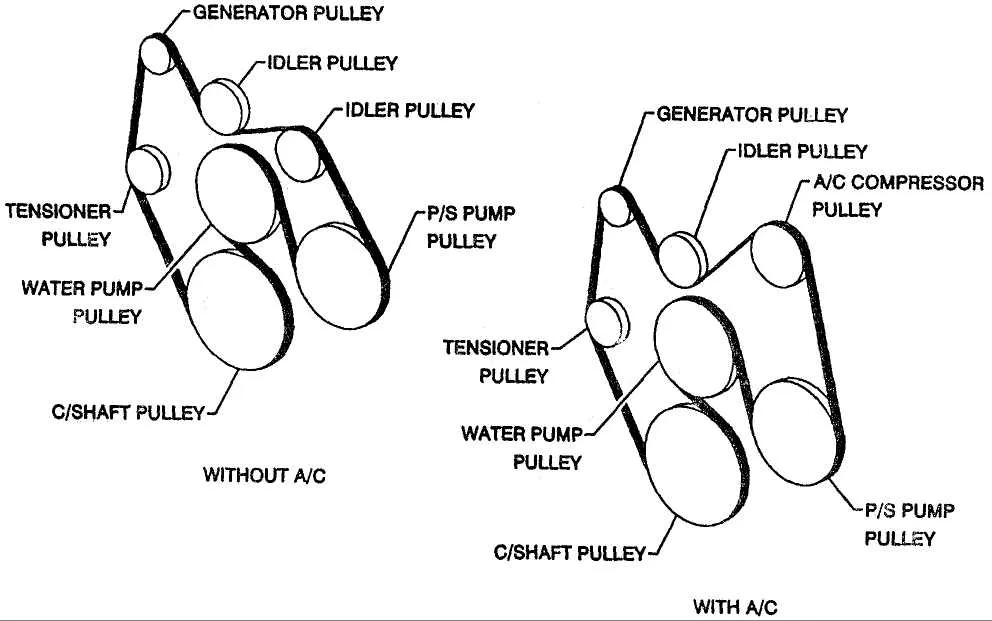
Apply about 1/2 inch of deflection at the midpoint between the crankshaft pulley and the accessory pulley by pressing the belt with moderate finger pressure. This ensures the belt maintains sufficient tension without overstressing the components.
Use a ruler or a belt tension gauge to measure deflection precisely; the recommended range lies between 1/4 inch and 3/4 inch, but 1/2 inch provides optimal balance for longevity and performance. Adjust the alternator or power steering pump bracket to achieve this tension by loosening the mounting bolts and moving the accessory slightly.
Check alignment visually to confirm the belt runs straight along all pulleys. Misalignment can cause premature wear or slipping even with correct tension. Tighten all bolts firmly once the proper tension is set, then recheck the deflection to verify it remained consistent.
After initial adjustment, run the engine at idle for a few minutes, then shut off and re-measure the belt tension. Belts often settle after a short break-in period, so a slight retightening may be necessary to maintain the correct deflection.
Replace the belt immediately if it shows cracks, glazing, or fraying, as these signs indicate loss of elasticity that compromises tension and function. Use a high-quality V-belt specifically sized for the Chevy 350 without air conditioning, typically a 3/8-inch width belt designed for this setup.