Ford 4.6 serpentine belt routing without air conditioning diagram
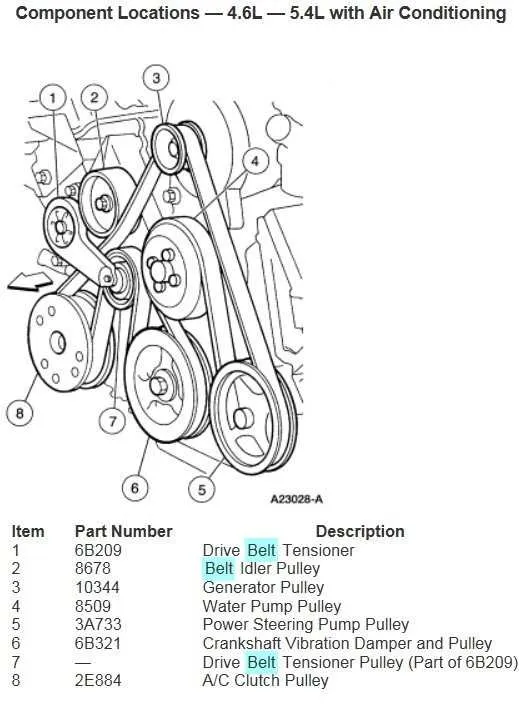
The Ford 4.6 engine, without air conditioning, uses a specific serpentine belt routing to ensure the proper functioning of essential components. To replace or inspect the belt, understanding the exact layout of the pulleys and tensioners is crucial for a smooth process.
The diagram for this configuration differs from those that include an AC compressor, simplifying the overall setup. The serpentine belt in this case drives the alternator, power steering pump, and water pump, each attached to a specific pulley. The belt routing avoids the AC compressor pulley entirely, which would otherwise occupy space in the typical serpentine belt system.
Make sure to use the correct tensioner tool for your specific model to avoid any issues during installation. Ensure the belt is properly routed around each component, and check the tensioner spring’s condition before replacing the belt. A properly installed belt will prevent slipping or premature wear, which can lead to more serious engine problems down the road.
Ford 4.6 Belt Diagram Without AC
The Ford 4.6 engine without air conditioning requires a straightforward serpentine belt system. This diagram shows the routing for the belt, which connects various components, such as the alternator, power steering pump, and water pump, without the added complexity of the AC compressor.
Start by confirming the number of grooves on the pulley system. The Ford 4.6 engine typically uses a 6-rib belt for this configuration. Ensure the belt’s length and width match the factory specifications to prevent slippage or premature wear.
- Alternator: Positioned towards the front of the engine, the alternator is driven by the serpentine belt and provides power to the electrical system.
- Power Steering Pump: The belt also drives the power steering pump, located on the side of the engine block.
- Water Pump: The water pump is also powered by the serpentine belt and circulates coolant throughout the engine.
Ensure the routing matches the diagram exactly to avoid improper tension on the belt, which could lead to premature wear or potential failure. The idler and tensioner pulleys must be in good condition to maintain proper tension. If the tensioner is faulty, it can result in belt slippage and eventual failure.
After installing the belt, check its alignment and ensure all pulleys rotate smoothly without resistance. It is advisable to inspect the system for any signs of wear, such as cracks or fraying, before regular operation.
Step by Step Routing of the Serpentine Belt Without AC Compressor
Begin by removing any tension from the serpentine belt. Use a suitable tool to release the tensioner, allowing the belt to be safely removed. Once the belt is off, inspect all pulleys for wear or damage.
Place the new belt over the crankshaft pulley. Ensure that the belt is properly seated in all grooves. Start routing the belt around the water pump pulley, ensuring it is snug against the pulley’s edge.
Next, guide the belt over the alternator pulley. Confirm the belt runs smoothly along the pulley and that the alignment is correct. Proceed by routing the belt over the power steering pulley, making sure it is tightly in place.
Route the belt over the idler pulley, keeping an eye on its positioning to avoid any slack. Finally, finish by placing the belt over the tensioner pulley. Double-check that the belt sits evenly across all pulleys.
Once everything is in place, use the tool to reapply tension to the belt. Check the belt’s tightness and alignment one final time to ensure it’s routed correctly without any twists or slack.
Start the engine to verify the belt is functioning properly, paying attention to any unusual noises or misalignments. If everything runs smoothly, the installation is complete.
Key Differences Between Standard and No AC Belt Configurations
The most significant difference between the standard and no AC belt configurations lies in the number of pulleys involved. A standard configuration with an AC compressor typically includes an additional pulley that drives the compressor. In contrast, the no AC setup removes this component, simplifying the belt routing by eliminating one pulley and associated tensioner.
The routing path of the serpentine belt also differs. In the standard configuration, the belt runs around the AC compressor pulley, while in the no AC setup, it bypasses this area and travels a more direct route around the remaining accessories. This change can impact the overall tension of the belt, requiring adjustments in the belt tensioner or idler pulley placement for proper operation.
Another key difference is in the length of the serpentine belt. The absence of the AC compressor often allows for a shorter belt since the system requires fewer components to be driven. It is important to ensure that the belt is sized correctly to avoid slipping or premature wear.
In summary, while the standard configuration with an AC compressor involves a more complex system of pulleys and a longer belt, the no AC configuration simplifies the system by reducing the number of components and shortening the belt length. Make sure to use the correct diagram for your specific setup to ensure proper belt routing and tensioning.
Tensioner and Pulley Alignment Tips for Smooth Installation
Ensure the tensioner and pulley are correctly aligned before installation to avoid unnecessary wear. Start by checking the position of the tensioner; it should be in the proper orientation relative to the engine block. Misalignment can cause uneven wear on the serpentine belt, leading to premature failure.
Verify the pulley grooves match those of the belt. If there is any discrepancy in size or shape, replace the pulley. A damaged or misaligned pulley can result in the belt slipping, causing noise and potential damage to surrounding components.
Before installation, hand-spin the pulleys to ensure they rotate freely. Any resistance could indicate a problem with the bearing or alignment. Additionally, check that the tensioner spring is fully engaged, as an improperly set tensioner can lead to inconsistent belt tension, causing it to slip or wear unevenly.
When installing the belt, make sure it sits properly in each pulley groove. The belt should have a firm grip without being overly tight. After securing the belt, double-check the alignment of all pulleys, as a slight misalignment can affect belt performance over time.
Lastly, always use a torque wrench when adjusting the tensioner to avoid overtightening, which can cause damage to the tensioner or the belt. Proper tension is key to preventing excessive wear and ensuring optimal performance.