2007 Toyota Tundra Belt Diagram Guide for Correct Routing and Installation
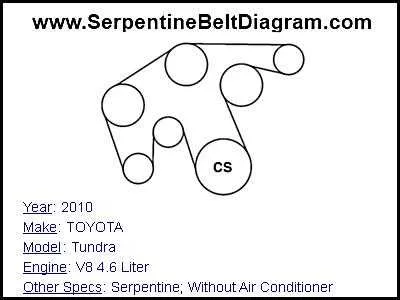
Check your 2007 Toyota Tundra’s serpentine belt routing before performing any maintenance. The belt runs across the alternator, power steering pump, air conditioning compressor, and crankshaft pulley. Following the correct path prevents slipping and reduces wear on components.
Locate the diagram: The factory belt diagram is usually printed on a sticker under the hood near the radiator support or on the engine cover. If missing, use a reliable service manual or a verified online resource to confirm the routing.
Inspect belt condition: Look for cracks, fraying, or glazing on the belt surface. Replace the belt immediately if any damage appears. Proper tension is critical–too loose causes slipping, too tight strains bearings.
Align the belt along the pulleys exactly as the diagram shows. Start with the crankshaft pulley, then route around the alternator, idler, tensioner, and other accessories. Rotate the engine by hand after installation to ensure the belt seats correctly.
Regularly checking the belt and following the correct diagram keeps your 2007 Toyota Tundra running smoothly, reduces the risk of breakdowns, and extends the life of engine components.
2007 Toyota Tundra Belt Diagram
Locate the serpentine belt routing for your 2007 Toyota Tundra directly on the engine compartment decal or in the service manual. Following the correct path prevents misalignment and premature wear.
The belt configuration varies by engine type. For the 4.7L V8:
- Crankshaft Pulley → Alternator → Idler Pulley → Water Pump → Power Steering Pump → Tensioner Pulley → Back to Crankshaft
For the 5.7L V8:
- Crankshaft Pulley → A/C Compressor → Alternator → Idler Pulley → Water Pump → Tensioner Pulley → Power Steering Pump → Return to Crankshaft
Follow these steps when replacing the belt:
- Release tension using a wrench on the tensioner pulley.
- Remove the old belt carefully, noting the routing path.
- Align the new belt on each pulley according to the diagram.
- Ensure the belt sits properly in the pulley grooves before releasing the tensioner.
- Double-check alignment and rotate the engine manually to verify smooth operation.
Maintaining correct belt tension and proper routing avoids slipping, noise, and damage to engine components. Replace the belt every 90,000 miles or if visible cracks appear.
Keep a printed copy of the diagram in your glove box for quick reference during maintenance or roadside checks.
Locating the Serpentine Belt Routing on a 2007 Tundra
Open the hood and focus on the front of the engine. The serpentine belt wraps around multiple pulleys, including the crankshaft, alternator, power steering pump, and A/C compressor. Look for a diagram sticker, often placed on the radiator support or near the fuse box, showing the exact belt path for your V8 or V6 engine.
If the diagram sticker is missing, trace the belt manually. Start at the crankshaft pulley at the bottom, then follow its route clockwise or counterclockwise to each accessory. Use a pen and paper or take a photo to replicate the path when replacing the belt. Ensure the belt sits correctly in all pulley grooves.
For clarity, here’s a table summarizing the typical routing for a 2007 Tundra 5.7L V8:
| Pulley | Position | Routing Notes |
|---|---|---|
| Crankshaft | Bottom center | Drives all accessories; start here when routing |
| Alternator | Top right | Belt wraps over the top |
| Power Steering Pump | Top left | Belt passes under before reaching pulley |
| A/C Compressor | Bottom left | Belt goes over the pulley |
| Idler Pulley | Center left | Guides belt tension; follow diagram carefully |
| Tensioner | Center right | Apply pressure to release tension while fitting belt |
Always double-check that the belt is fully seated in all grooves and maintains proper tension after installation. Misalignment can cause noise or premature wear.
Identifying Tensioner and Pulley Positions for Proper Installation
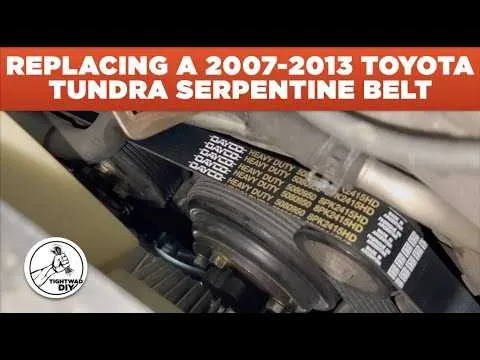
Locate the automatic tensioner on the 2007 Toyota Tundra by tracing the serpentine belt from the crankshaft pulley upward. The tensioner sits near the center-right of the engine bay, angled slightly toward the front. Use a wrench or socket to rotate the tensioner clockwise, relieving pressure on the belt for removal or installation.
Identify each pulley by its function: the alternator pulley is positioned above the tensioner, the water pump pulley lies directly behind the upper radiator hose, and the power steering pulley sits to the lower-left near the engine block. Confirm the idler pulleys by their smooth rotation without accessories attached; they maintain proper belt routing and prevent slippage.
Align the belt according to the factory diagram, ensuring it wraps around each pulley with no twists. Double-check the tensioner’s position after seating the belt: it should apply firm pressure, keeping the belt snug across all pulleys. Rotate the engine manually two full revolutions to verify proper alignment and smooth operation before starting the vehicle.
Mark the pulleys with chalk or a marker if needed for reference, especially the tensioner path, to simplify reinstallation and reduce errors. Consistent attention to pulley positions prevents belt misalignment, reduces wear, and maintains reliable accessory function throughout the engine.
Step-by-Step Belt Replacement Procedure with Diagram Reference
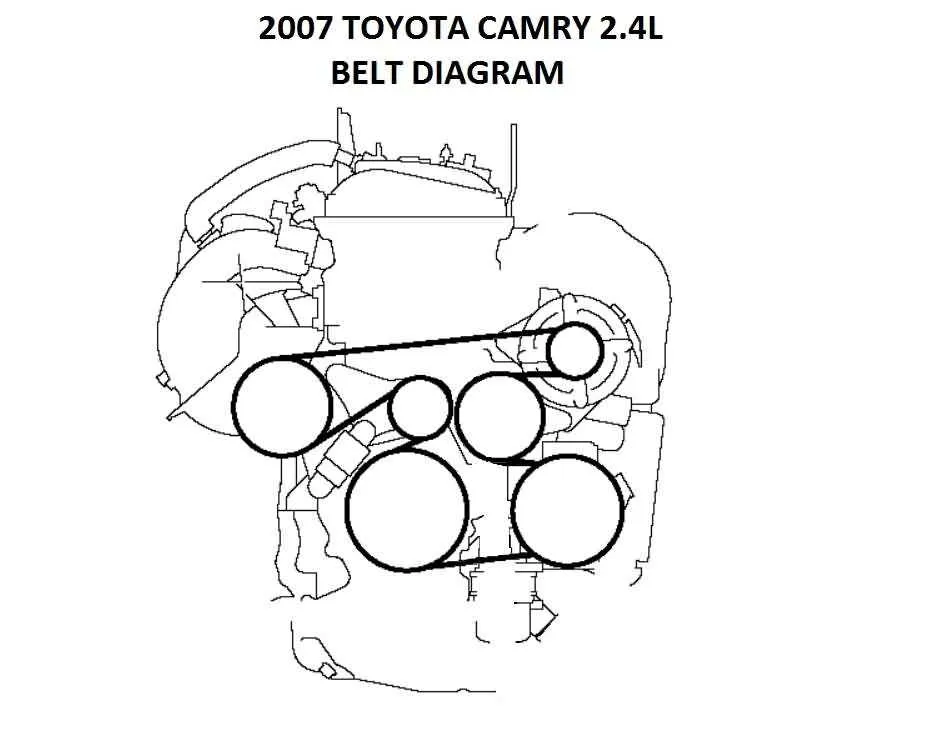
Locate the serpentine belt routing diagram under the hood or in the owner’s manual to ensure proper alignment. Identify the tensioner pulley and use a wrench to rotate it, releasing tension on the old belt. Slide the belt off each pulley, noting its path against the diagram.
Inspect all pulleys and the tensioner for wear or damage. Replace any components showing cracks, wobble, or rough movement. Confirm the replacement belt matches the length and width specified for the 2007 Toyota Tundra model.
Route the new belt around the pulleys following the diagram precisely. Ensure it sits fully in each pulley groove without twisting. Rotate the tensioner again to allow the belt to slide onto the final pulley smoothly.
Check the belt alignment visually along the entire path, making sure it is seated evenly. Start the engine briefly and observe the belt’s movement to verify proper installation and tension. Make any adjustments if the belt tracks incorrectly or squeals.