6.0 Powerstroke Engine Serpentine Belt Routing Diagram and Component Layout Guide
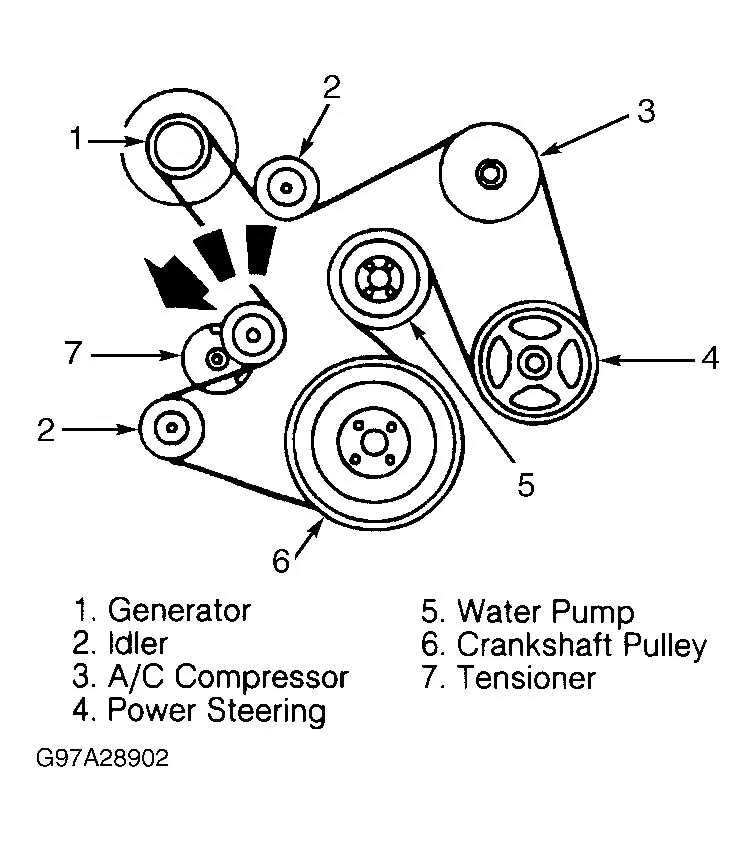
Locate the serpentine belt routing directly on the engine before starting any removal or replacement. For the 6.0 Powerstroke, the belt runs over the crankshaft pulley, alternator, water pump, power steering pump, and A/C compressor in a specific sequence that ensures proper tension and performance. Misrouting can cause premature wear or accessory failure.
Follow manufacturer torque specifications when reinstalling the tensioner. The automatic tensioner keeps the belt tight across all pulleys, and a slight misalignment can lead to squealing noises or belt slippage. Use a wrench on the tensioner pulley to relieve tension before sliding the old belt off.
Check pulley alignment and condition before placing the new belt. Worn or misaligned pulleys reduce belt life and can damage connected components. Inspect the crankshaft, alternator, and idler pulleys for grooves, rust, or wobble, replacing any that show excessive wear.
Verify the routing diagram against the new belt layout. Print or photograph the diagram to ensure each pulley matches the correct path. Proper routing maintains engine efficiency and prevents accessory malfunction during startup and operation.
Maintain belt tension consistently by adjusting or replacing the tensioner if it shows signs of weakness. Over time, tensioners can weaken, reducing contact pressure on the belt and causing slipping. Regular inspection every 30,000 miles helps avoid unexpected failures.
Powerstroke Serpentine Belt Diagram
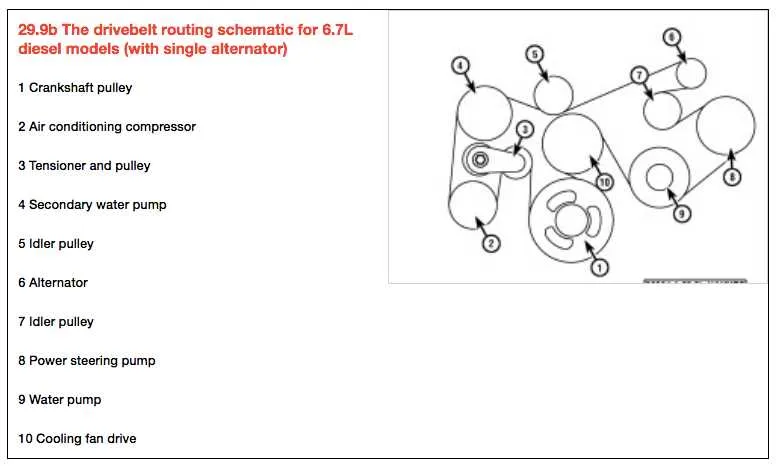
Locate the tensioner on the front of the 6.0 Powerstroke engine to release belt tension safely. The belt wraps around the crankshaft pulley, water pump, alternator, A/C compressor, and power steering pump in a specific routing. Ensure the ribbed side of the belt aligns with the corresponding grooves on each pulley for proper grip and longevity.
Follow the diagram closely: starting at the crankshaft pulley, route the belt clockwise to the A/C compressor, then up to the alternator, down to the tensioner, around the water pump, and finally across the power steering pump before returning to the crankshaft. Double-check pulley alignment before applying tension to avoid misalignment that can cause squealing or premature wear.
Inspect each pulley for signs of damage, wear, or wobble before installing the new belt. Clean any debris or residue that could interfere with the belt’s traction. Rotate the engine by hand after installation to confirm smooth movement along all pulleys.
Maintain proper belt tension by adjusting the tensioner according to manufacturer specifications. Check the belt regularly for cracks, fraying, or glazing, replacing it at the first sign of deterioration to prevent sudden engine accessory failure.
Locating the Serpentine Belt on a 6.0 Powerstroke Engine
Identify the serpentine belt on the passenger side of the 6.0 Powerstroke engine, running across the alternator, water pump, and power steering pulley. Access the belt by removing the engine cover and positioning yourself at the front of the truck. The belt wraps around multiple pulleys in a specific routing pattern, which is usually indicated on a diagram sticker inside the engine bay or in the vehicle’s service manual.
Start tracing from the crankshaft pulley at the bottom center of the engine. From there, follow the belt up to the tensioner pulley, which maintains proper tension. The tensioner is spring-loaded and can be moved using a 3/8-inch drive ratchet or breaker bar, allowing the belt to slip off the pulleys safely. Ensure the belt aligns correctly with each pulley groove to prevent misalignment and premature wear.
On the 6.0 Powerstroke, the idler pulley sits above the water pump and guides the belt toward the alternator. Confirm the belt wraps clockwise or counterclockwise around each accessory as shown in the diagram. Double-check the routing before starting the engine to avoid slipping or damage to components. Regular inspection of the belt for cracks, fraying, or glazing extends its service life and keeps engine accessories functioning reliably.
Step-by-Step Guide to Reading the Serpentine Belt Diagram
Locate the diagram on the engine cover or in the owner’s manual. Check the orientation carefully to match the front of the engine and the position of each accessory pulley.
-
Identify the crankshaft pulley. It drives the belt and serves as the starting point for tracing the routing.
-
Trace the belt to the alternator pulley. Ensure the belt wraps around it according to the diagram, following the correct path over or under tensioners and idlers.
-
Follow the routing to the water pump and power steering pump pulleys. Confirm each wrap aligns with the diagram, checking the number of grooves matching the belt type.
-
Move on to the air conditioning compressor pulley. Some 6.0 Powerstroke setups have specific over/under routing at this point to prevent slippage.
-
Check tensioner placement. Compare the diagram’s tensioner direction with the actual spring-loaded tensioner. Make sure the belt sits firmly in the grooves.
-
Double-check the idler pulleys. Each idler should redirect the belt without twisting or overlapping. Match each pulley location to the diagram carefully.
Verify the complete path once more before starting the engine. Rotate the crankshaft pulley by hand to ensure smooth movement and correct alignment of all pulleys.
Common Belt Routing Mistakes and How to Avoid Them
Align the serpentine belt precisely with each pulley to prevent slippage and premature wear. Skipping the tensioner during installation can cause uneven pressure, leading to noise and reduced belt life. Always rotate the tensioner fully to ensure the belt seats correctly in all grooves.
Double-check the routing diagram specific to the 6.0 Powerstroke. Swapping the alternator and water pump paths is a frequent error that results in overheating or electrical issues. Trace the belt path with your finger along each pulley before turning the engine on to catch misrouting.
Inspect pulleys for debris, corrosion, or misalignment. Even slight pulley wobble can push the belt off track or wear it unevenly. Tighten mounting bolts and replace damaged idler pulleys immediately to maintain smooth operation.
Use consistent tension measurements. A belt too loose will slip under load, while one too tight accelerates bearing wear. Check tension specifications in the service manual and adjust using the tensioner, not by forcing the belt onto pulleys.
Mark or photograph the original routing before removal. This prevents errors when reinstalling, especially in complex configurations with multiple accessories. Small visual cues like belt direction arrows or pulley labels reduce mistakes and speed up installation.