Mtd belt diagram with clear routing details for lawn mower and outdoor equipment
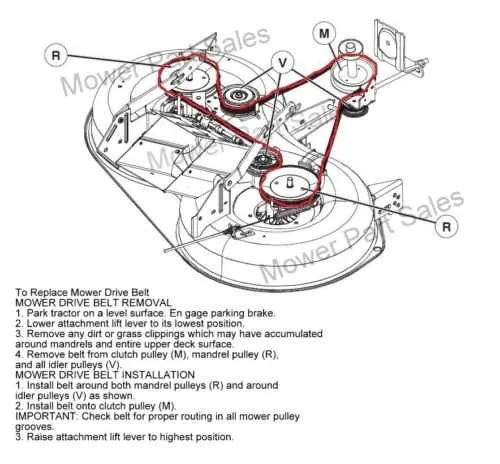
Check the belt routing on your MTD mower before starting any maintenance, because a misplaced belt can lead to uneven cutting or complete drive loss. A clear diagram helps identify the path across pulleys and tensioners, reducing the chance of installation errors.
Focus on the drive belt that connects the engine pulley to the transmission. This component transfers power directly, so its correct alignment ensures smooth movement. Pay attention to the tension spring position, since improper tension shortens the lifespan of both the belt and pulleys.
When working with the deck belt, trace its route around the spindle pulleys and idlers as shown in the diagram. Each pulley has a specific role, and reversing the path can cause the blades to spin incorrectly. Always compare your setup with the manufacturer’s diagram before tightening the system.
Keep the diagram nearby during seasonal maintenance. By referencing it while checking wear or replacing belts, you reduce guesswork and keep the mower running consistently. Proper use of the diagram extends equipment life and minimizes downtime during peak mowing periods.
MTD Belt Diagram
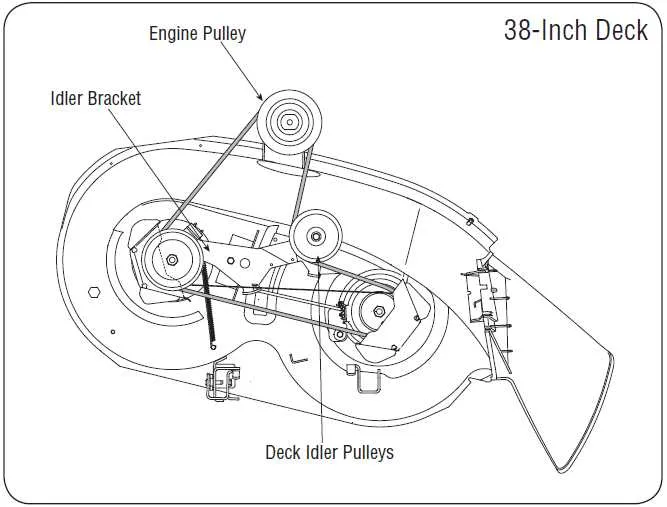
Check the routing before removing the old belt, because installing a new one without reference can lead to misalignment. Take a clear photo of the deck and pulley system to use as a guide during reassembly.
Key points for reading an MTD belt diagram:
- Locate the drive pulley at the engine shaft; this is the starting point of the belt path.
- Identify the idler pulleys, which maintain tension and guide the belt around corners.
- Find the mandrel pulleys on the mower deck, usually two or three depending on the model.
- Follow the diagram to confirm the belt loops around the pulleys without twisting.
During installation:
- Release the tension spring to create slack.
- Slide the belt around the drive pulley first.
- Route the belt across the mandrel pulleys, matching the exact diagram layout.
- Finish by fitting the belt over the idler pulleys and reconnecting the spring.
After routing, rotate the blades by hand to verify free movement. If the belt rides outside a pulley groove or rubs against guards, adjust immediately before starting the engine.
Locating the Correct Belt Path for Your Specific MTD Model
Check the model number plate under the seat or near the engine housing before searching for a belt path. Each MTD mower series uses unique pulley layouts, so the diagram must match your exact model code.
Download the official manual from the MTD website by entering your model and serial numbers. The manual provides a precise routing sketch for the drive and deck belts. Using a generic diagram risks incorrect installation, which leads to slippage or premature wear.
Compare the pulleys on your mower with the diagram: drive pulley at the engine, idler pulleys guiding the belt, and spindle pulleys on the mower deck. Ensure the belt sits inside all guides and tensioners exactly as shown.
If the original manual is unavailable, check the stamped part number on the existing belt. Match it with MTD’s parts lookup to find both the correct replacement belt and its routing scheme. This method avoids confusion between similar deck sizes and pulley configurations.
After fitting the belt, rotate the pulleys by hand to verify smooth movement and proper alignment before starting the engine. A correctly routed belt should track tightly without twisting or rubbing against the housing.
Step-by-Step Process to Read and Apply the Diagram
Begin by placing the diagram next to the mower so that every pulley and belt path matches your direct line of sight. Align the orientation of the drawing with the machine to avoid confusion.
Identify the drive pulley first, as it usually connects to the engine crankshaft. Trace the belt path from this point, noting every change in direction across idler pulleys and tensioners.
Check the diagram for arrows or labels showing belt routing. Follow these paths carefully and confirm that each pulley is in the correct position before moving to the next step.
Place the belt around the largest pulleys first, typically the engine and deck pulleys, before routing it through smaller idlers. This method prevents slack from shifting in the wrong direction.
Apply tension by rotating the tensioner pulley according to the diagram. Ensure the belt sits fully in the grooves and does not ride on the edges.
Rotate the pulleys by hand once the belt is installed. Compare the result with the diagram again to confirm alignment and smooth movement across all pulleys.
Recheck the entire path before starting the mower. A quick final comparison between the physical setup and the diagram prevents misalignment that could lead to belt wear or machine damage.
Troubleshooting Common Issues with Belt Installation
Check belt tension first. A loose belt slips under load and overheats, while an overtightened belt strains pulleys and bearings. Adjust until the belt deflects about half an inch with moderate finger pressure.
Inspect pulley alignment. If pulleys sit at an angle or out of line, the belt tracks incorrectly and wears unevenly. Use a straightedge across pulleys and reposition brackets until edges match up cleanly.
Look for debris in the belt path. Grass, dirt, or small twigs push the belt out of its groove and cause sudden derailment. Clean every pulley and guard before reinstalling the belt.
Confirm routing accuracy. An incorrectly routed belt twists during operation, creating vibration and premature wear. Compare your installation with the exact diagram for your mower model and adjust if a single pulley is skipped or crossed.
Examine belt condition. Cracks, glazing, or frayed edges reduce grip and shorten service life. Replace a damaged belt instead of reinstalling it, since small defects grow quickly under tension.
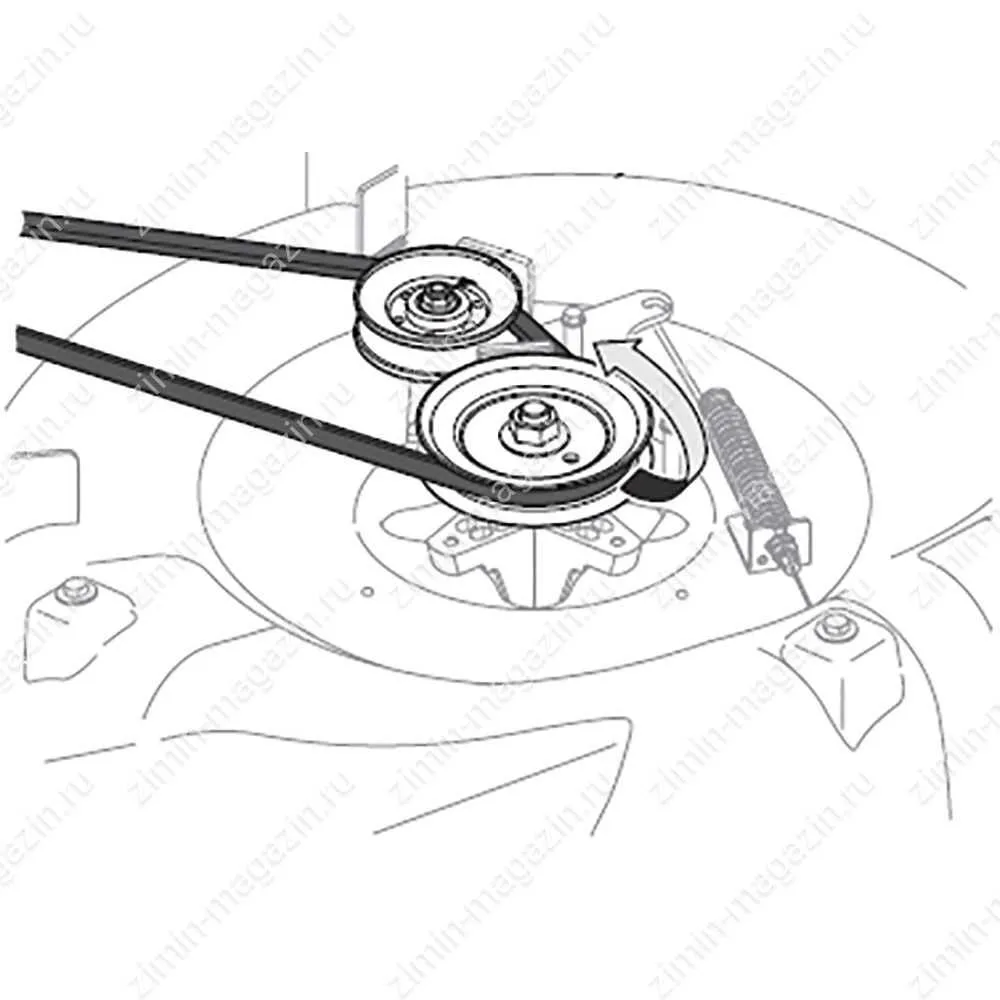
Check idler pulley springs. Weak or stretched springs fail to keep the right tension on the belt, leading to slippage. Replace springs that no longer return the arm firmly to its original position.
Verify fastener tightness. Loose mounting bolts on pulleys or guards shift alignment during mowing. Tighten hardware evenly and retest belt tracking before putting the mower back into service.