Husqvarna GTH2548 drive belt diagram with routing guide and replacement details
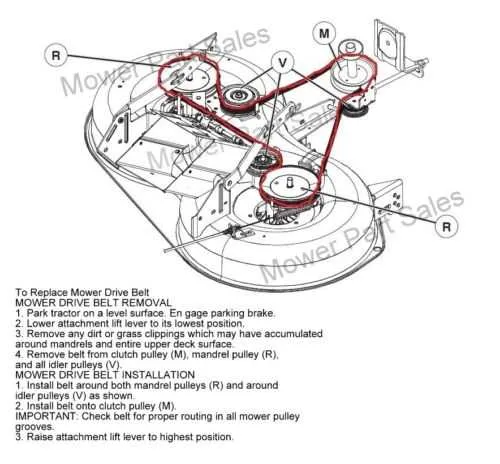
Check the belt routing before removing any parts to avoid mistakes during reassembly. The Husqvarna GTH2548 uses a drive belt that connects the engine pulley, idler pulleys, and transmission pulley in a specific pattern. Following the correct diagram prevents slippage and premature wear.
Inspect the belt path carefully: the flat side of the belt should contact flat idler pulleys, while the V-side must seat inside grooved pulleys. A common mistake is flipping the belt, which leads to noise, uneven movement, and damage to the transmission input.
Keep tension in mind while studying the diagram. The spring-loaded idler pulley maintains proper grip, and misrouting will cause the spring to sit at the wrong angle. This not only reduces traction but also risks breaking the spring. Compare your setup to the diagram after installation to confirm alignment.
Use the diagram as a guide during both replacement and adjustment. A correctly routed belt ensures smooth forward and reverse motion, steady mowing performance, and longer lifespan of pulleys and bearings. Double-check pulley rotation and belt seating immediately after installation for reliable operation.
Husqvarna GTH2548 Drive Belt Diagram
Follow the routing shown in the diagram to install the drive belt correctly. The belt travels around the engine pulley, engages the idler pulleys, and wraps around the transaxle pulley. Proper alignment prevents premature wear and ensures stable power transfer.
- Place the belt around the engine pulley at the front of the mower.
- Guide it through the flat idler pulley located near the center frame.
- Route the belt over the transaxle pulley positioned at the rear axle.
- Engage the spring-loaded idler pulley to maintain tension.
Check that the belt sits fully in each pulley groove without twists. Adjust the idler arm spring if the tension feels loose. Inspect the diagram during reassembly to avoid routing mistakes, which can cause slipping or uneven drive performance.
- Verify pulley alignment before tightening guards or covers.
- Confirm that the belt moves smoothly when the clutch pedal is pressed.
- Recheck after the first few minutes of operation to ensure stability.
Correct Routing of the Drive Belt Around Pulleys
Place the drive belt around the engine pulley first, keeping the flat side in contact with the pulley surface. Ensure the belt seats properly in the groove without twisting.
Route the belt forward to the deck idler pulleys. Keep tension on the belt with your hand while guiding it through the pulleys, aligning it with the belt guides to avoid slippage.
Continue by wrapping the belt around the spindle pulleys on both sides of the mower deck. Make sure the V-side of the belt sits inside the pulley grooves for secure grip during operation.
Finish the routing by feeding the belt around the tensioner pulley. Engage the spring-loaded arm to apply proper tension, then verify alignment across all pulleys before tightening any guards or covers.
Step Sequence for Removing and Installing the Belt
Disconnect the spark plug wire to prevent accidental engine start. Raise the mower deck to its highest position for easier access. Release the belt tension by pulling back the idler arm and slide the belt off the engine pulley.
Remove the belt from the deck pulleys one by one, noting the exact routing for reinstallation. Pull the belt clear of the transmission pulley, then carefully slide it out from under the deck.
Position the new belt around the transmission pulley first, then route it through the deck pulleys following the original path. Keep the belt snug on each pulley before moving to the next. Finally, loop the belt over the engine pulley while holding the idler arm back, then release the arm to apply proper tension.
Check that the belt sits evenly in all pulley grooves and verify smooth rotation by turning the pulleys by hand. Reconnect the spark plug wire and lower the deck before operating the mower.
Adjustment Tips to Maintain Proper Belt Tension
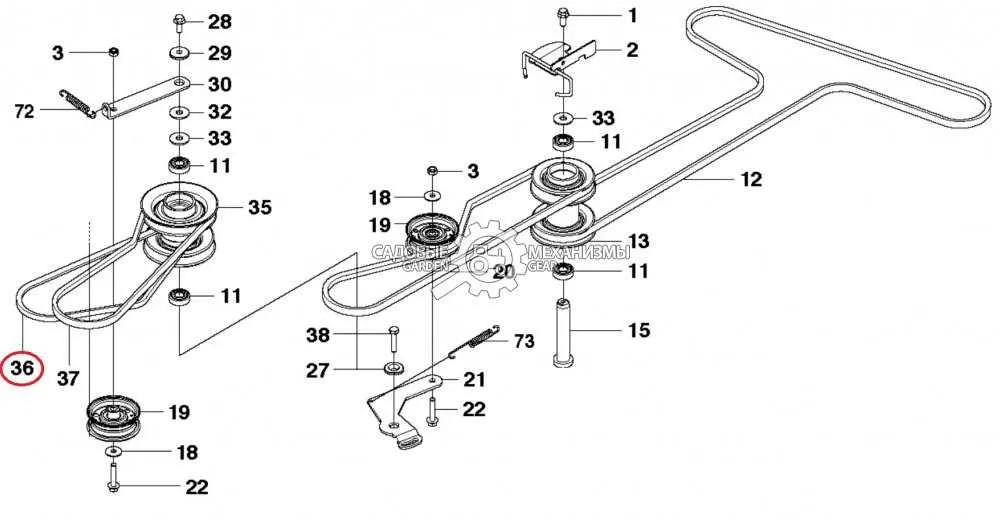
Check belt tension by pressing down midway between pulleys; the belt should deflect about 1/2 inch. If the deflection is greater, adjust the idler pulley to tighten it.
Loosen the idler pulley bracket bolts slightly, move the pulley to increase or reduce tension, then retighten the bolts firmly. Make small adjustments and recheck deflection each time to avoid over-tightening.
Inspect pulley alignment while adjusting. Misaligned pulleys can cause uneven wear and noise, so ensure the belt runs straight across all pulleys.
After setting proper tension, run the mower at low throttle and watch the belt track. If the belt shifts or vibrates excessively, stop the engine and readjust until it runs smoothly.
Recheck belt tension after the first few hours of use, as new belts often stretch slightly. Adjust again if necessary to maintain consistent performance.