Ford Taurus 2006 3.0 Engine Belt Routing Diagram for Accurate Installation and Maintenance
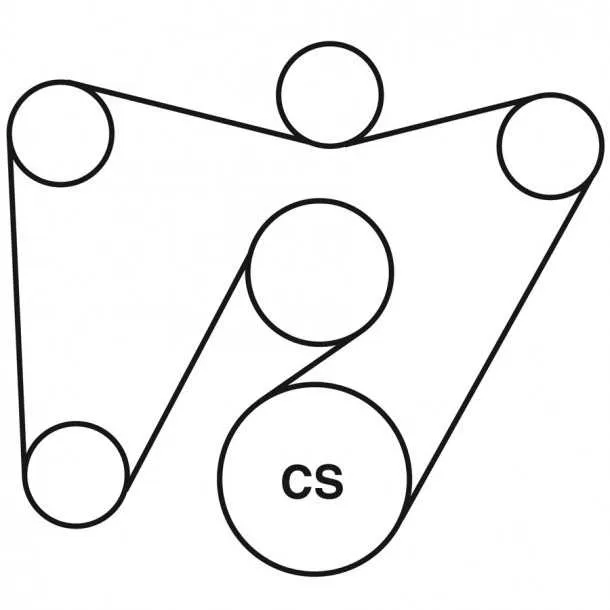
Locate the serpentine belt routing clearly to ensure proper installation on your 2006 Ford Taurus 3.0L engine. This diagram illustrates the exact path the belt follows around the alternator, power steering pump, water pump, and crankshaft pulley. Use it as a reference to avoid misalignment that could cause premature wear or component failure.
The belt tensioner must be properly engaged to maintain optimal tension and prevent slipping. Check the diagram for the tensioner’s position relative to other pulleys. Follow the indicated direction carefully to ease belt replacement without damaging the tensioner or other accessories.
Replace the belt promptly if you notice cracks, fraying, or glazing. The diagram helps verify correct belt length and routing during installation. Keeping the belt aligned according to this guide will support consistent engine performance and reduce noise or vibration issues.
2006 Ford Taurus 3.0 Belt Diagram
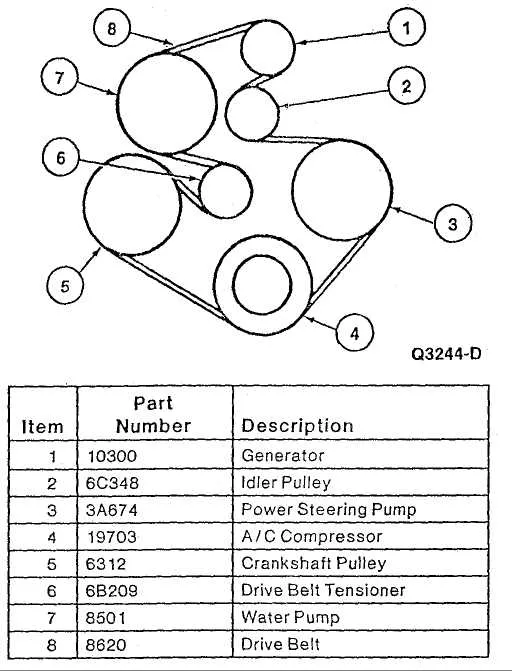
The serpentine belt on the 2006 Ford Taurus 3.0 engine runs several key components including the alternator, power steering pump, water pump, and air conditioning compressor. Proper routing ensures smooth operation and prevents premature wear.
Follow this belt path starting from the crankshaft pulley:
- Crankshaft pulley (bottom center)
- Upward to the alternator on the top right
- Across to the power steering pump on the top left
- Down and around the tensioner pulley located near the middle left
- Back down to the water pump pulley near the lower left
- Finally, loop around the air conditioning compressor pulley on the lower right
The belt wraps in a clockwise direction when viewed from the front of the engine. Use the tensioner to adjust belt tightness after installation, ensuring no slack but avoiding overtightening.
Inspect the belt for cracks, fraying, or glazing. Replace it if any damage appears to avoid failures that can cause engine overheating or electrical issues.
Keep a diagram handy during replacement to maintain correct routing. This will save time and reduce the risk of misalignment, which can lead to belt slippage or noise.
Identifying the Correct Serpentine Belt Routing for the 3.0 Engine
Use the engine code to determine the exact routing. The 2006 Ford Taurus 3.0L came with two engine variants: the Vulcan (OHV) and the Duratec (DOHC). These engines use different belt paths, and the wrong diagram can lead to incorrect installation and accessory failure.
The Vulcan engine has a single serpentine belt that drives all front-end accessories, including the alternator, power steering pump, A/C compressor, water pump, and crankshaft pulley. In contrast, the Duratec engine uses a more complex routing with an additional idler pulley and reversed water pump rotation.
Locate the engine label under the hood. It typically states “3.0L OHV” for Vulcan or “3.0L DOHC” for Duratec. If the label is missing, check the intake manifold: Vulcan uses a black plastic manifold with “3.0L” embossed on top; Duratec has silver runners with “DOHC” markings.
Refer to the matching routing diagram below:
| Engine | Belt Routing Description |
|---|---|
| 3.0L Vulcan (OHV) | Crankshaft → A/C Compressor → Idler Pulley → Alternator → Power Steering Pump → Tensioner → Water Pump → Crankshaft |
| 3.0L Duratec (DOHC) | Crankshaft → A/C Compressor → Idler Pulley → Alternator → Tensioner → Power Steering Pump → Water Pump (reverse) → Crankshaft |
Use a belt routing diagram label if present on the radiator support. If missing, match your engine configuration with the table above. Misrouting can damage the water pump or cause belt slippage.
Step-by-Step Guide to Removing and Installing the Belt on a 2006 Ford Taurus 3.0
First, disconnect the vehicle’s battery to prevent any electrical accidents while working on the engine.
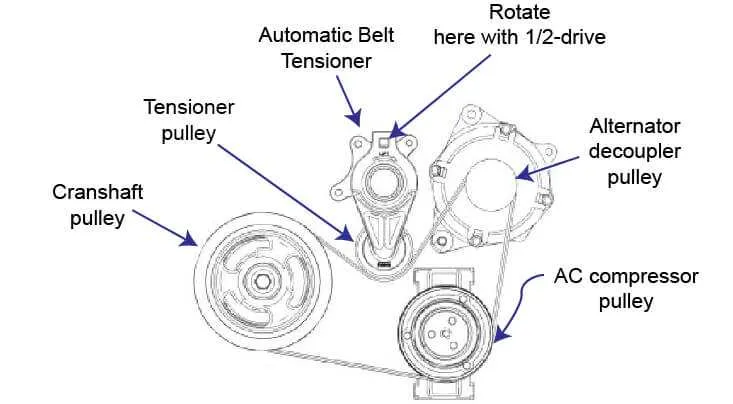
Locate the serpentine belt tensioner, which is positioned near the top of the engine. Using a socket wrench, rotate the tensioner counterclockwise to relieve tension on the belt.
While holding the tensioner in place, slide the belt off one of the pulleys. Once the belt is loose, carefully remove it from the remaining pulleys. Keep track of how the belt is routed for reinstallation.
To install the new belt, follow the routing diagram found on the engine bay or in the owner’s manual. Start by placing the belt around the crankshaft pulley, ensuring it sits properly in the grooves.
Continue routing the belt around each of the pulleys, making sure it stays aligned and correctly positioned. Once all pulleys are covered, rotate the tensioner again to create enough slack to fit the belt into place.
Release the tensioner, ensuring the belt is tight and secure. Check the belt’s alignment by hand to confirm it is sitting correctly on all pulleys.
Reconnect the battery and start the engine to test the new belt. Listen for any unusual noises and inspect the belt’s movement to ensure it is running smoothly.
Troubleshooting Common Issues with the Belt and Tensioner Assembly
If the serpentine belt is slipping or making noise, check for wear or misalignment in the tensioner. A loose or worn tensioner will not maintain the correct pressure, causing belt slippage. Inspect the tensioner for any visible damage or excessive movement. If the spring mechanism seems weak or the pulley wobbles, replace the tensioner immediately.
Check the belt for cracks, fraying, or glazing. These are signs that the belt is nearing the end of its lifespan. Replace the belt if any of these signs are visible. A glazed belt can cause slipping, reducing the efficiency of your system.
Inspect the pulleys for wear or damage. If the pulley grooves appear worn or the surface is damaged, replace the pulley. Misaligned or damaged pulleys can cause the belt to wear unevenly, leading to further issues.
If you hear a squealing noise during startup, it’s often caused by the belt slipping or the tensioner not providing enough pressure. In some cases, the problem might be caused by a failing alternator or air conditioning compressor. Check the alternator and compressor bearings for excessive play or noise.
Lastly, if the engine overheats, the water pump may be improperly driven by a faulty belt or tensioner. Inspect the belt’s alignment and the tensioner’s condition to ensure the water pump is operating correctly. A loose or misaligned belt can prevent the water pump from turning efficiently, causing overheating.