2012 Jeep Grand Cherokee 5.7 Serpentine Belt Routing and Pulley Diagram
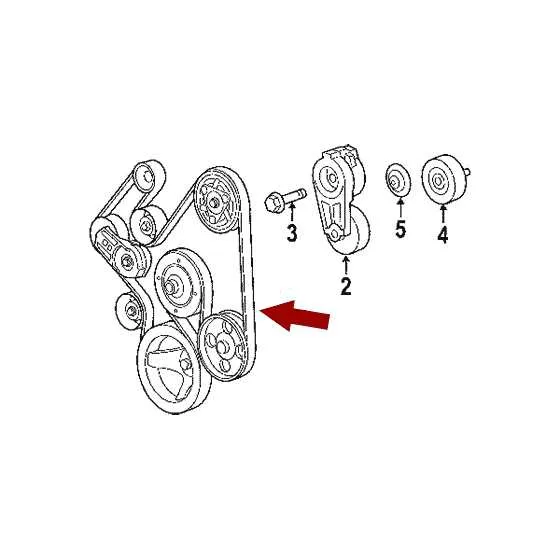
Check the serpentine belt for visible wear or cracks before any maintenance. The 5.7L V8 engine uses a single serpentine belt that drives the alternator, power steering pump, water pump, and air conditioning compressor. Proper alignment on all pulleys prevents slipping and premature damage.
Locate the belt routing diagram under the hood near the radiator support or on the engine cover. This diagram shows the exact path over each pulley, including the tensioner pulley position. Following it ensures the belt maintains correct tension and reduces noise during operation.
Use a wrench or serpentine belt tool to release the tensioner while removing the old belt. Inspect all pulleys for smooth rotation and absence of wobble. Replace any worn or seized pulleys to avoid repeated belt issues.
When installing the new belt, route it exactly according to the diagram, ensuring it sits properly in the pulley grooves. Double-check tension and alignment, then run the engine briefly to confirm the belt moves smoothly without squeaking or jumping off the pulleys.
2012 Jeep Grand Cherokee 5.7 Belt Diagram Maintenance and Replacement Guide
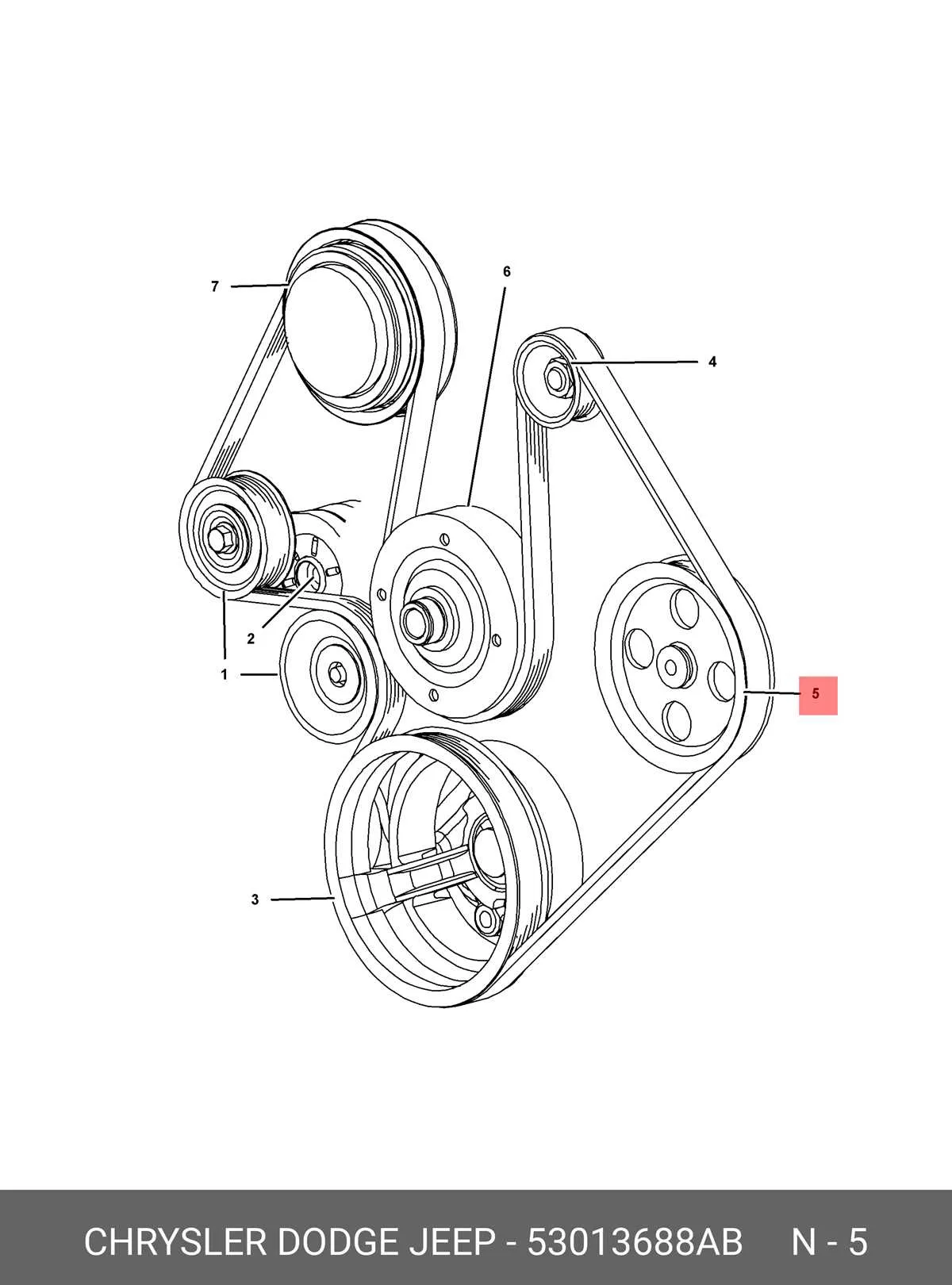
Inspect the serpentine belt every 15,000 miles for cracks, fraying, or glazing. A worn belt can reduce alternator and power steering performance.
Before removing the belt, release tension using the tensioner pulley. Rotate the tensioner clockwise and carefully slide the belt off the pulleys.
Compare the new belt with the old one to ensure correct length and rib alignment. Route the belt according to the factory diagram, confirming it seats properly on all pulleys.
Tighten the tensioner slowly and check that the belt has proper tension. A belt that is too loose may slip; one that is too tight can damage bearings.
After installation, start the engine and observe belt tracking. Ensure it runs smoothly without wobbling or misalignment across the alternator, water pump, crankshaft, and AC pulleys.
Replace the belt every 60,000 miles or sooner if signs of wear appear. Regular inspection prevents unexpected failures and maintains stable engine operation.
Identify and Trace the Serpentine Belt Routing
Begin by locating the serpentine belt on the 2012 Jeep Grand Cherokee 5.7L. The belt wraps around multiple pulleys including the crankshaft, alternator, power steering pump, water pump, and A/C compressor.
Use the following steps to trace the belt accurately:
- Inspect the belt path diagram under the hood or refer to the service manual to match pulley positions.
- Start at the crankshaft pulley, the main drive point, and follow the belt direction along each pulley.
- Note the routing over idler pulleys and tensioners, ensuring the belt sits properly in each pulley groove.
- Check for correct alignment on accessory pulleys, confirming no twists or overlaps.
- If reinstalling, maintain the same routing pattern and apply tension via the automatic tensioner or a wrench on the tensioner pulley.
Mark each pulley with chalk or tape if necessary to avoid confusion during removal and installation. Confirm the belt passes over the correct side of each pulley before starting the engine.
Regularly inspect the belt path during maintenance to detect misalignment or wear early, preventing slipping or damage to engine accessories.
Check Belt Condition and Detect Wear or Damage
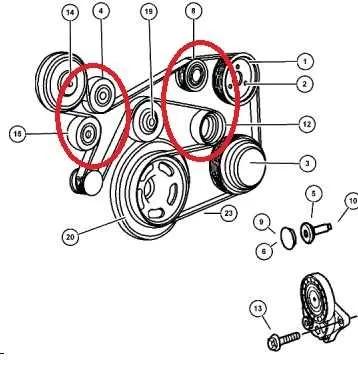
Inspect the serpentine belt for cracks, fraying, or missing chunks along the ribbed side. Pay close attention to the edges for signs of splitting or curling, which indicate weakening.
Examine the smooth side for glazing or shiny spots. These areas can cause slipping and reduce accessory performance. Check for uneven wear patterns that may signal misaligned pulleys.
Press lightly on the belt between pulleys to test tension. A belt that feels loose or deflects excessively may require adjustment or replacement. Listen for squealing noises during engine operation, as they often indicate worn material or improper tension.
Look for contamination from oil, coolant, or debris, which can accelerate deterioration. Clean pulleys and remove residue to maintain proper belt grip.
Replace the belt immediately if you notice deep cracks, missing ribs, or significant fraying. Use the vehicle’s belt routing diagram to ensure correct installation and maintain smooth operation of all engine accessories.
Step-by-Step Instructions for Belt Removal and Installation
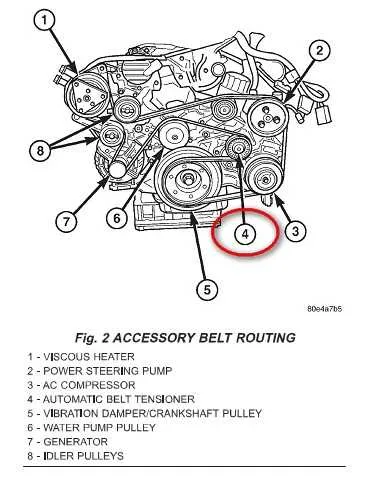
Begin by locating the serpentine belt tensioner on the 5.7L engine. Use a 3/8-inch ratchet or breaker bar to rotate the tensioner clockwise, relieving tension on the belt.
Slide the belt off the pulleys, starting with the easiest access point, typically the alternator or power steering pulley. Carefully note or photograph the belt routing for reference during installation.
Inspect all pulleys for wear, misalignment, or damage while the belt is removed. Replace any worn components before installing a new belt.
Position the new belt around the pulleys following the routing diagram, leaving the tensioner pulley for last. Ensure the belt sits fully in each pulley groove and follows the correct path without twists.
Rotate the tensioner again to allow the belt to slide over the tensioner pulley. Slowly release the tensioner, confirming the belt is seated correctly on all pulleys.
Double-check the alignment and tension by spinning the pulleys by hand, if accessible. Recheck the routing to confirm the belt matches the diagram exactly.
Start the engine briefly to verify smooth operation and listen for unusual noises. Turn off the engine and inspect the belt one more time to ensure proper placement and tension.