Complete Murray m155-42 Belt Diagram for Accurate Installation and Maintenance
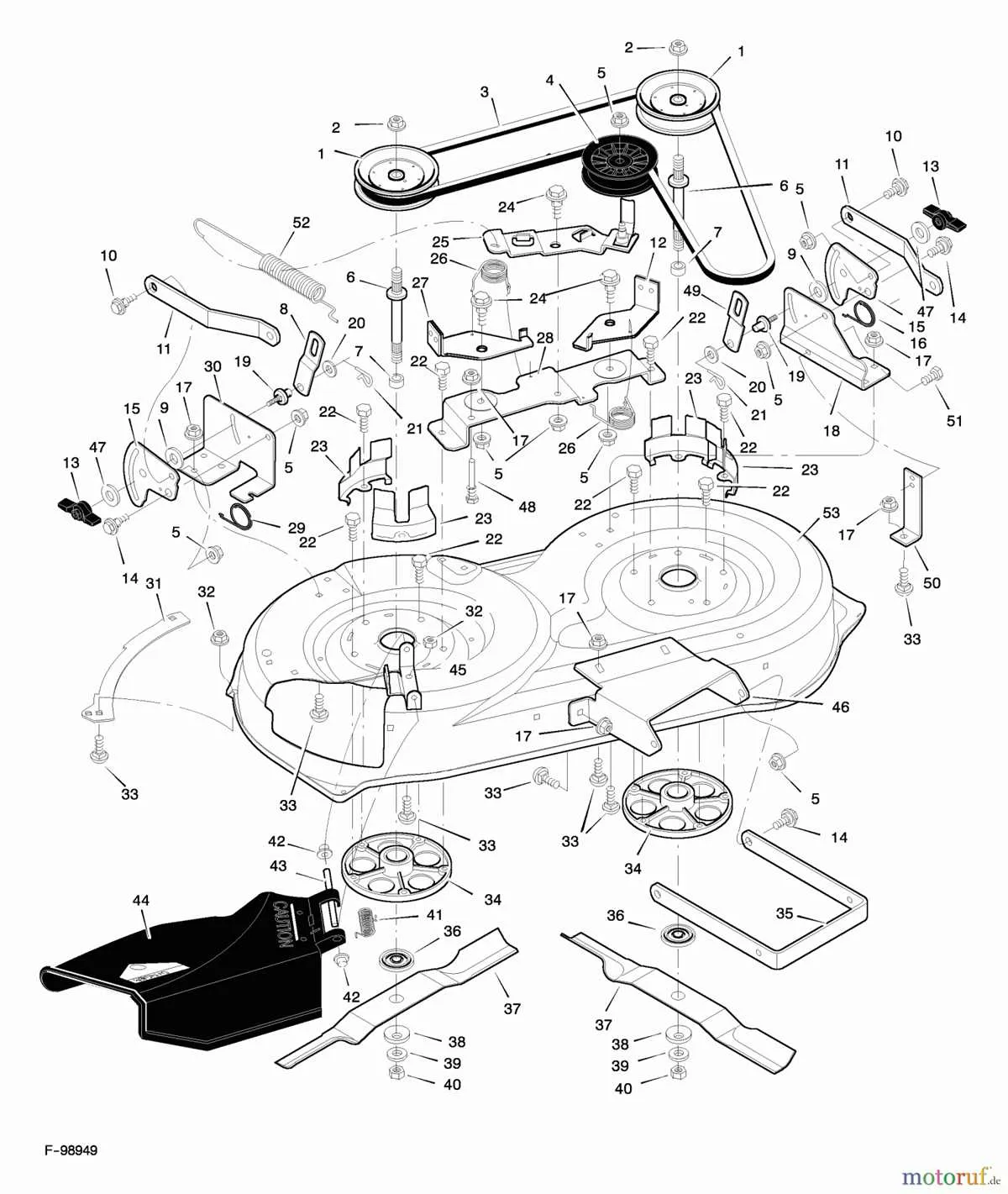
Check the belt routing immediately when replacing or inspecting your Murray M155-42 mower. Correct alignment prevents slippage and premature wear. The primary belt runs from the engine pulley to the deck drive, looping around the idler and tension pulleys. Ensure each pulley spins freely and is free of debris before positioning the belt.
Follow a consistent path across the deck spindles. Start at the engine pulley, guide the belt around the idler pulley to maintain proper tension, then route it over the deck pulleys according to the manufacturer’s diagram. Misalignment by even a small margin can cause uneven blade rotation and excessive noise.
Check the tension adjustment after installation. The idler arm should apply sufficient pressure to keep the belt snug without overloading the pulleys. Adjust the spring or bolt mechanism gradually, testing the belt by hand before operating the mower. Proper tension extends the life of both the belt and the pulleys.
Inspect periodically for cracks, fraying, or glazing. Replace the belt if any damage is visible. Clean the pulleys with a soft cloth to remove grass clippings and dirt. Keeping the belt and pulleys clean reduces friction and improves cutting performance.
Murray M155-42 Belt Diagram
Consult the Murray M155-42 belt diagram directly when replacing or routing the mower deck belt to prevent slippage and uneven wear. The diagram shows that the belt wraps around the engine pulley, tensioner, and mower spindles in a specific sequence. Follow the arrows indicated for clockwise and counterclockwise rotation to maintain correct blade direction and cutting efficiency.
Installation tip: Begin by looping the belt over the engine pulley first, then guide it around the tensioner pulley, ensuring it sits properly in the grooves. Pull the deck to its lowest position to relieve tension during routing, which simplifies alignment and reduces stress on the belt.
Check each spindle pulley for smooth rotation before finalizing belt placement. Misaligned pulleys can cause premature belt wear. After installation, run the mower briefly at low speed to verify that the belt tracks accurately and that all pulleys spin freely without vibration.
Maintenance advice: Inspect the belt periodically for cracks or fraying, especially near the tensioner and spindles. Replace the belt immediately if you notice significant wear to avoid damage to the deck or engine components.
Identifying the Correct Belt Path for Murray M155-42
Follow the belt path diagram exactly to avoid slipping or excessive wear. Position the belt around the crankshaft pulley first, then route it through the idler pulleys, making sure it wraps around the deck pulleys in a smooth, continuous loop. Ensure the tensioner maintains firm pressure on the belt without twisting it. Confirm that all pulleys rotate freely and align properly with the belt grooves to prevent derailment during operation. Double-check the belt orientation against the stamped diagram on the mower deck; a reversed path can cause blade stalling and reduce cutting performance. Tighten the tensioner gradually while manually spinning the pulleys to verify smooth motion before starting the engine. Consistent tracking on the pulleys prevents fraying and extends the belt’s service life.
Step-by-Step Guide to Installing the M155-42 Belt
Loosen the mower deck and secure it at its highest position. Remove the old M155-42 belt by carefully sliding it off the pulleys, starting with the idler pulley. Inspect the pulleys and spindle shafts for wear or debris before installing the new belt.
Position the new belt around the engine pulley first, ensuring the ribbed side aligns with the grooves. Route the belt along the idler and tension pulleys according to the Murray M155-42 belt diagram, keeping it seated firmly in each groove. Avoid twisting or stretching the belt during this process.
Engage the tensioner by pulling the idler pulley away from the belt path, then slide the belt fully into place. Slowly release the tensioner, allowing it to apply pressure evenly across the belt. Verify the belt is aligned correctly on every pulley and spins freely without rubbing against deck components.
Lower the mower deck and reconnect any components removed for clearance. Rotate the engine pulley by hand to confirm smooth belt operation. Start the engine at low throttle, observing the belt for proper movement and tension. Make minor adjustments if the belt slips or misaligns.
Complete the installation by securing all fasteners and checking that the deck height adjustment moves without interference. Regularly inspect the belt after initial use to ensure it maintains proper alignment and tension for reliable performance.
Troubleshooting Common Belt Alignment Issues
Check pulley alignment immediately if the belt tracks unevenly or produces squealing noises. Misaligned pulleys cause premature belt wear and reduce cutting performance.
- Inspect the idler pulleys for lateral movement. Tighten or replace pulleys that wobble or shift under tension.
- Ensure the engine pulley and mower deck pulleys are perfectly parallel. Use a straight edge across pulley faces to detect discrepancies exceeding 1/16 inch.
- Verify that the belt follows the correct path according to the Murray M155-42 diagram. Crossed or twisted belts often lead to slippage and uneven tension.
- Check for worn or damaged belt grooves. Replace belts with frayed edges, missing teeth, or glazed surfaces to maintain proper grip.
Adjust the deck height if the belt rides off-center. Uneven mower deck positioning shifts tension unevenly, increasing pulley wear. Confirm that all mounting bolts are tight and the deck is level side-to-side.
- Remove the belt and spin each pulley by hand. Smooth rotation without wobble indicates correct alignment.
- Reinstall the belt following the exact routing shown in the belt diagram. Ensure the tensioner maintains proper pressure without forcing the belt off track.
- Test the mower briefly under low power. Observe the belt path and listen for unusual noises, adjusting tension or pulley positions as necessary.
Lubricate pivot points on the tensioner arm sparingly. Excess lubricant can attract debris, but dry or stiff pivots often cause the belt to misalign under load. Regular inspection after every 10 hours of operation prevents major belt failures.
Replace any bent or cracked pulleys immediately. Even minor deformities disrupt alignment and shorten belt life. Keep spare pulleys and belts on hand to minimize downtime.