2013 Jeep Patriot Serpentine Belt Diagram Layout and Installation Guide
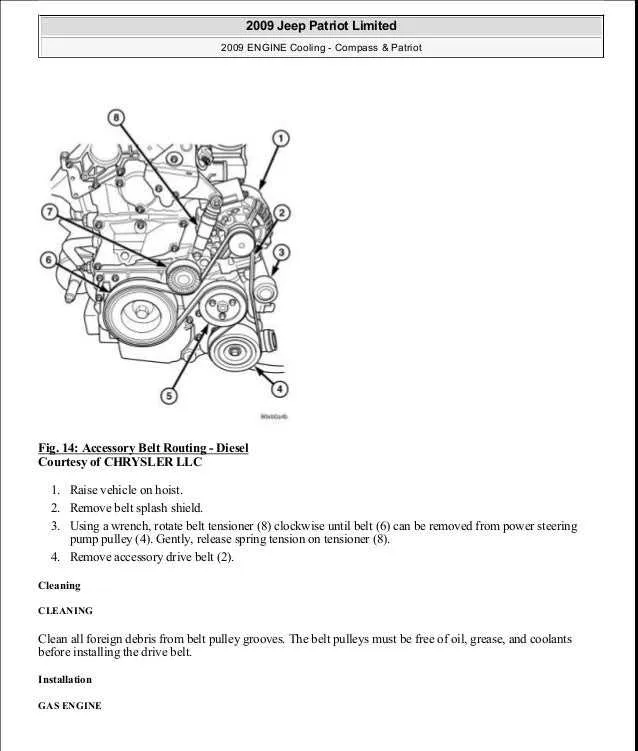
Check the serpentine belt routing immediately if you notice squealing noises or reduced accessory performance. On the 2013 Jeep Patriot, the belt drives the alternator, power steering pump, and air conditioning compressor, so correct alignment is critical for smooth operation.
Use the factory diagram to ensure the belt follows the proper path around each pulley. For the 2.0L and 2.4L engines, the belt wraps around the crankshaft pulley, tensioner, idler pulleys, and all accessory pulleys in a specific sequence. Incorrect routing can lead to premature wear or component damage.
Inspect the belt for cracks, fraying, or glazing during every oil change. Tension should be checked at the automatic tensioner; it should allow slight movement but resist excessive slack. Replace the belt every 60,000 miles or sooner if wear is evident to maintain optimal engine performance.
Keep the diagram accessible in the engine bay or repair manual while performing replacement. Proper alignment ensures the alternator, water pump, and other accessories operate efficiently, preventing overheating, battery drain, or steering issues. Following the diagram precisely reduces installation errors and extends belt lifespan.
2013 Jeep Patriot Serpentine Belt Diagram Detailed Guide for Maintenance and Replacement
Replace the serpentine belt on a 2013 Jeep Patriot every 60,000 miles or at the first signs of wear, such as cracking, fraying, or glazing. Use the factory-approved belt size: 6PK1520 for 2.0L engines and 6PK1545 for 2.4L engines.
Before removing the belt, identify all accessory components. The belt drives the alternator, power steering pump, water pump, and air conditioning compressor. Confirm pulley orientation using the vehicle-specific diagram, located either under the hood or in the owner’s manual.
- Relieve tension: Use a 15mm wrench to rotate the tensioner clockwise and slide the belt off the pulleys.
- Inspect pulleys and tensioner: Check for wobble, noise, or visible wear. Replace any faulty components before installing the new belt.
- Route the new belt: Follow the serpentine belt diagram. Ensure the belt sits properly in all pulley grooves to prevent slipping or noise.
- Apply tension: Release the tensioner slowly to seat the belt under correct tension. Verify the belt is centered on each pulley.
- Test operation: Start the engine and observe belt movement. Confirm no squealing, misalignment, or unusual vibration.
Regularly inspect the belt during oil changes for minor cracks or fraying edges. Keep the engine compartment clean to prevent debris from damaging the belt. Store spare belts in a cool, dry place to avoid premature degradation.
For vehicles with high mileage, check the belt every 10,000 miles. Replace immediately if deep cracks appear or if the belt stretches, as this can lead to alternator failure or loss of power steering assistance.
- Use only OEM or equivalent-quality belts.
- Verify tensioner function before installation.
- Lubricate tensioner pivot points lightly if necessary.
- Do not twist or stretch the belt excessively during installation.
- Double-check alignment on all pulleys after engine start.
Identify All Serpentine Belt Components and Routing Paths
Begin by locating the serpentine belt on the 2013 Jeep Patriot. The belt wraps around several key components including the crankshaft pulley, alternator, power steering pump, air conditioning compressor, and the tensioner. Each pulley has a distinct size and orientation that ensures proper belt alignment.
Trace the belt path starting at the crankshaft pulley at the bottom center of the engine. From there, it moves clockwise around the tensioner, which maintains the correct tension automatically. Next, it wraps around the alternator pulley to supply electrical power to the vehicle.
Continue the routing over the air conditioning compressor pulley, allowing the system to operate efficiently. The belt then travels around the power steering pump pulley, ensuring hydraulic pressure for smooth steering. Finally, it returns to the crankshaft pulley, completing the loop.
Inspect each pulley for wear, misalignment, or debris before installing a new belt. Verify that the belt sits fully in the pulley grooves and that the routing matches the diagram specific to your engine configuration. Proper installation prevents slippage, noise, and premature wear.
Use the engine bay diagram printed on the radiator support or in the owner’s manual for reference. Adjust the belt around the tensioner carefully using a wrench to relieve tension. Check that the belt spins freely and all components rotate without binding before starting the engine.
Step-by-Step Instructions for Removing and Installing the Serpentine Belt
Locate the belt routing diagram on the engine cover or under the hood to confirm the correct path. Ensure the engine is off and cool before beginning.
Use a wrench or serpentine belt tool to rotate the tensioner pulley clockwise, releasing tension on the belt. Carefully slide the belt off the accessory pulleys while maintaining tension on the tool.
Inspect each pulley for wear, misalignment, or damage while the belt is removed. Replace any faulty pulleys before installing the new belt.
Position the new serpentine belt according to the diagram, starting from the crankshaft pulley and moving around each accessory pulley. Keep the belt aligned with the pulley grooves throughout the process.
Rotate the tensioner pulley again to allow the belt to slip over it, then slowly release the tensioner so it applies proper tension. Check that the belt sits correctly on all pulleys without twists or misalignment.
Manually rotate the engine two full turns using a wrench on the crankshaft pulley to ensure the belt tracks smoothly and maintains proper tension on all pulleys.
Recheck all pulley alignment and tension after the engine turns. Listen for any unusual noises when starting the engine, indicating a possible misalignment or loose belt.
Troubleshoot Common Belt Issues and Adjust Tension Properly
Inspect the serpentine belt for visible cracks, fraying, or glazing on the ribs. A worn belt produces squealing noises during engine start or under load. If the belt shows excessive wear, replace it immediately with a belt that matches the factory specifications for the 2013 Jeep Patriot.
Check belt alignment across all pulleys. Misalignment can cause uneven wear and premature failure. Use a straight edge or visually verify that the belt tracks correctly on each pulley, ensuring it sits fully in the grooves without twisting or slipping.
Measure belt tension using a tension gauge or follow the manual method: press the belt at the midpoint between pulleys. The belt should deflect approximately ½ inch under moderate finger pressure. Adjust tension by loosening the tensioner bolt and moving the tensioner until the proper deflection is achieved, then securely retighten the bolt.
Listen for unusual noises after installation. A properly tensioned belt should run quietly. Persistent squealing or chirping may indicate worn pulleys, a weak tensioner, or incorrect routing. Inspect pulleys for wobble, damage, or debris that can interfere with belt operation.
Inspect the belt periodically every 15,000 miles or during routine maintenance. Maintaining proper tension and pulley condition extends belt life, prevents engine accessory failure, and ensures consistent performance.