2005 Ford F150 Serpentine Belt Routing and Replacement Guide
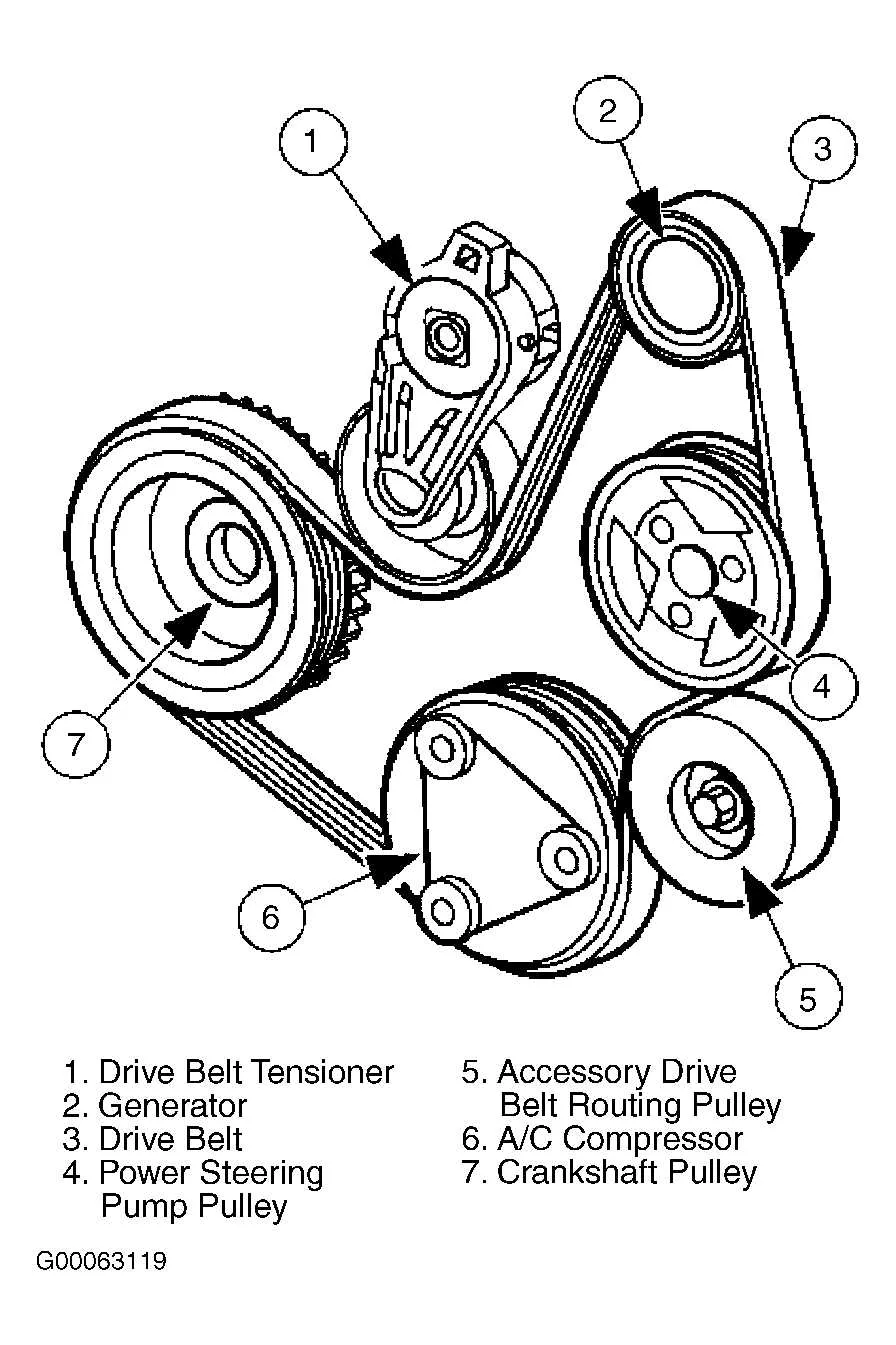
Check the belt routing on the 2005 Ford F150 before loosening any components. The serpentine belt runs across the crankshaft pulley, alternator, power steering pump, and A/C compressor, with the tensioner maintaining proper pressure. A clear diagram helps confirm the exact path and reduces the risk of misalignment during reinstallation.
Always inspect the belt surface for cracks, fraying, or glazing while reviewing the diagram. A worn belt can slip, reduce alternator charging, or impair the function of accessories like the power steering and air conditioning. Following the diagram ensures each pulley engages correctly, avoiding noise and premature wear.
Use the diagram as a reference when replacing the belt or checking pulley alignment. A misrouted belt can damage components and make the truck unsafe to drive. Keep the routing guide accessible in the engine bay or service manual so you can quickly verify the correct setup after any repair or maintenance work.
2005 Ford F150 Belt Diagram
Follow the factory routing diagram to ensure the serpentine belt fits correctly around all pulleys. The 2005 Ford F150 with a 4.6L or 5.4L engine routes the belt around the crankshaft pulley, alternator, power steering pump, air conditioning compressor, water pump, and tensioner. Always check the path on the label under the hood before removing the old belt.
Place the new belt on the crankshaft pulley first, then wrap it around the accessories, keeping the grooves aligned with each pulley. Leave the tensioner for last. Use a breaker bar or a serpentine belt tool to rotate the tensioner clockwise, then slide the belt over the final pulley. Release the tensioner slowly to lock the belt in place.
Inspect the belt’s alignment across every pulley. If any section sits outside the grooves, remove it and repeat the routing. A correct fit prevents squealing, slipping, and premature wear. For additional accuracy, compare the belt length and rib count with the specifications listed in the vehicle manual.
Correct Serpentine Belt Routing for 2005 Ford F150 Engines
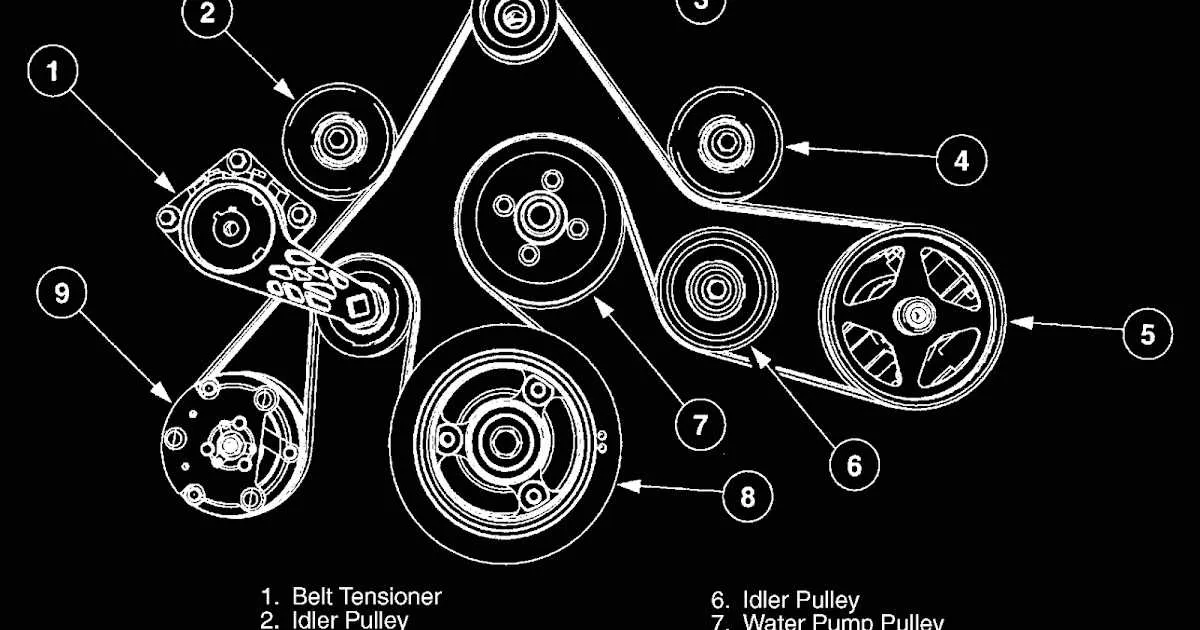
Follow the factory routing diagram printed on the radiator support to ensure the belt sits correctly across all pulleys. For the 4.6L and 5.4L V8 engines, the belt runs from the crankshaft pulley to the A/C compressor, then across the idler, alternator, power steering pump, and tensioner. For the 4.2L V6 engine, the routing differs slightly, passing from the crankshaft pulley to the water pump, alternator, power steering pump, and tensioner before returning to the crankshaft.
Check that the ribbed side of the belt always contacts ribbed pulleys such as the alternator and crankshaft, while the smooth side contacts flat pulleys like the tensioner and idlers. Misalignment or twisting leads to premature wear and noise. Verify the tensioner applies firm pressure and the belt rests evenly across each groove without gaps.
After installation, rotate the crankshaft by hand through two full revolutions to confirm proper seating. Inspect for correct orientation and confirm that the belt clears all brackets and components. This simple check prevents slippage, ensures steady accessory operation, and avoids unexpected belt failure on the road.
Steps to Identify Pulley Locations and Alignment
Check the crankshaft pulley first, located at the bottom front of the engine. Use it as a reference point for routing since all belts loop around it.
Locate the alternator pulley on the upper passenger side. Confirm that its groove lines up with the crankshaft pulley by sighting across the belt path.
Inspect the power steering pump pulley on the driver’s side. Verify that the belt sits evenly across its grooves without twisting.
Find the idler pulley near the center of the belt path. Confirm that it spins freely and sits flush, preventing belt offset.
Examine the tensioner pulley directly beneath the alternator. Apply a wrench to the tensioner arm and verify that the pulley maintains proper alignment under load.
- Compare pulley surfaces by sighting along the belt’s plane from one side of the engine.
- Check for wobble by rotating each pulley by hand with the belt removed.
- Measure belt contact angles to ensure equal grip across driven components.
Finish by aligning all pulleys visually and checking belt tracking after running the engine briefly. Any side-to-side drift signals misalignment requiring adjustment.
Signs of Incorrect Belt Installation and How to Fix Them
Check for squealing noises right after starting the engine; this often means the belt is misaligned or too loose. Adjust the tensioner with the proper tool until the belt sits firmly without slack.
Look for visible fraying or uneven wear on the edges. This indicates the belt rides outside the pulley grooves. Reseat the belt carefully, ensuring each rib matches the pulley channels before tightening.
Notice vibrations in the steering or fluctuating alternator output. These symptoms suggest the belt slips on one or more pulleys. Clean the pulley surfaces, verify alignment, and retighten the belt to restore consistent operation.
If you detect overheating or weak air conditioning performance, the belt might not drive the water pump or compressor correctly. Inspect the routing against the diagram, reposition the belt, and confirm that every pulley is engaged as designed.