2AZ FE Engine Belt Diagram and Component Layout for Accurate Installation
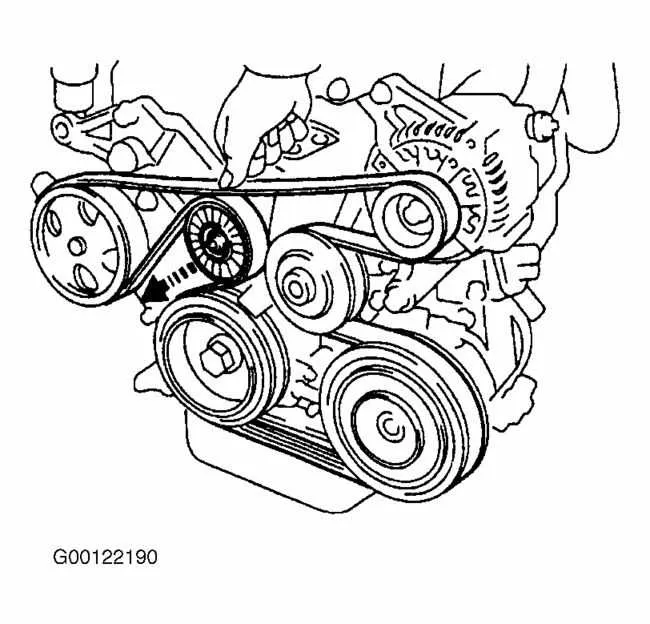
Check the belt routing carefully before attempting removal on a 2AZ-FE engine. The serpentine belt drives the alternator, water pump, power steering pump, and A/C compressor. Incorrect alignment can cause premature wear or system failure. Refer to the diagram to identify each pulley and confirm belt positioning.
Inspect tensioner and idler pulleys for smooth rotation and proper tension. Replace any pulleys that show signs of noise, wobble, or wear. Proper tension ensures optimal belt life and prevents slipping during engine operation.
Follow the recommended sequence when removing and reinstalling the belt. Start with loosening the tensioner, then slip the belt off the easiest accessible pulley. When installing, route the belt according to the diagram, making sure it sits fully in each pulley groove. Double-check alignment before starting the engine to avoid damage.
Maintain a record of belt inspection intervals. Typical 2AZ-FE serpentine belts last between 60,000 and 100,000 miles, depending on driving conditions. Regular inspection and timely replacement prevent breakdowns and maintain system performance.
2AZ FE Belt Diagram Guide for Proper Routing and Maintenance
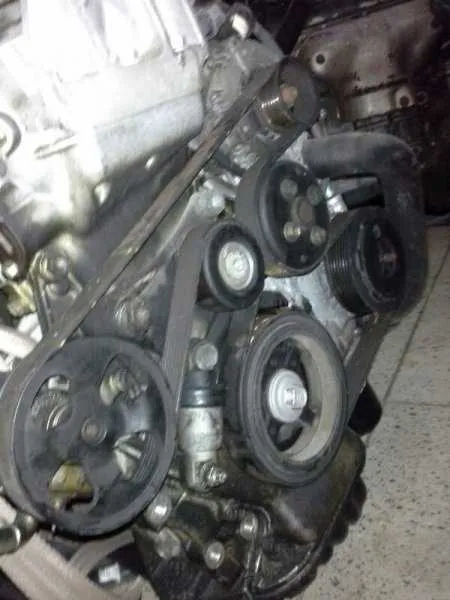
Follow the manufacturer’s routing pattern exactly to prevent belt slippage and premature wear. Begin by identifying the alternator, water pump, power steering pump, and tensioner positions. Align the belt over each pulley according to the diagram, ensuring it sits fully in the pulley grooves without twisting.
Check the belt tensioner before final installation. The tensioner must provide proper pressure to maintain belt contact with all pulleys. Use a calibrated gauge if available, or apply moderate thumb pressure to confirm adequate tension without overstretching.
Inspect the belt for cracks, fraying, or glazing before installation. Replace any damaged belt immediately. Apply light silicone-based lubricant on pulleys only if they show signs of excessive friction; avoid over-lubricating to prevent slippage.
After installation, rotate the engine manually for two full revolutions and observe the belt path. Ensure alignment remains correct and the belt moves smoothly over all pulleys. Listen for unusual noises, such as squealing, which indicate misalignment or tension issues.
Schedule regular inspections every 30,000 miles or as specified by the vehicle manual. Replace the belt at recommended intervals to maintain consistent performance and prevent engine component damage.
Visual Reference of 2AZ FE Serpentine Belt Layout
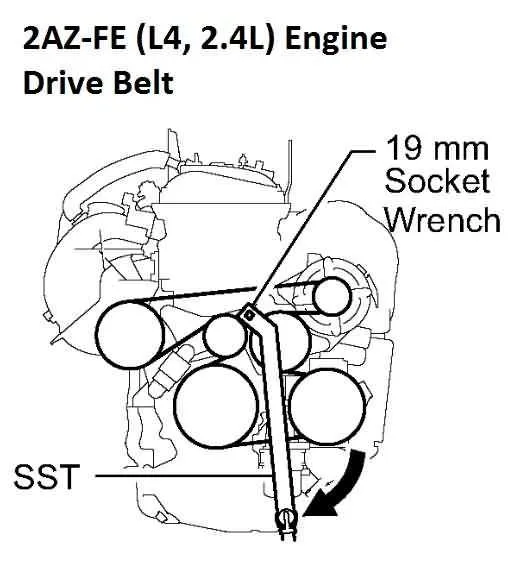
Position the serpentine belt around the crankshaft pulley first, ensuring full contact with the grooves. Route the belt clockwise, guiding it over the alternator pulley next, then over the tensioner pulley to maintain proper tension. Wrap the belt around the water pump pulley carefully, confirming alignment with each groove to prevent slipping. Continue by passing the belt over the idler pulley, keeping it flat against the pulley surface, and finish by routing it over the A/C compressor pulley. Double-check that the belt seats evenly on all pulleys without twists or overlaps.
Use a diagram from the service manual as a reference to confirm routing, matching each pulley to its corresponding belt path. Rotate the crankshaft manually two full turns after installation to ensure smooth movement and proper tension distribution. Inspect the belt for any misalignment or slack before starting the engine, and adjust the tensioner if necessary to achieve uniform tension across all pulleys.
Mark each pulley contact point with chalk or a washable marker for future maintenance checks. Replace the belt immediately if any cracks, fraying, or glazing appear, and ensure the tensioner moves freely without binding. Following this layout precisely prevents premature wear and maintains consistent accessory function.
Common Misalignment Issues and Corrective Actions
Check the serpentine belt for uneven wear patterns, fraying, or cracking. These signs often indicate pulley misalignment or tension problems.
- Inspect all pulleys for wobbling or looseness. Replace bearings if any pulley deviates more than 0.5 mm laterally.
- Measure belt tension using a gauge. For a 2AZ-FE engine, tension should range between 150–200 N on a cold engine.
- Verify that the belt sits correctly in each pulley groove. Misalignment can cause slipping or premature wear.
Realign pulleys using a straightedge or laser alignment tool. Ensure crankshaft, alternator, water pump, and tensioner pulleys are co-planar within 0.3 mm.
- Loosen mounting bolts of the misaligned component slightly.
- Adjust position until the belt tracks perfectly across all pulleys.
- Tighten bolts to manufacturer torque specifications: alternator 29–35 Nm, water pump 22–27 Nm.
- Recheck tension and alignment after engine run-in of 500–1000 km.
Replace worn tensioners immediately. A tensioner with less than 10 mm travel or visible rust can destabilize the belt path.
Inspect for contamination. Oil or coolant on the belt can increase slippage and accelerate misalignment. Clean pulleys and belt surfaces with isopropyl alcohol before reinstallation.
Recheck alignment periodically. Even small deviations under 1 mm can reduce belt life by 20–30% on the 2AZ-FE engine.
Step-by-Step Procedure for Belt Removal and Installation
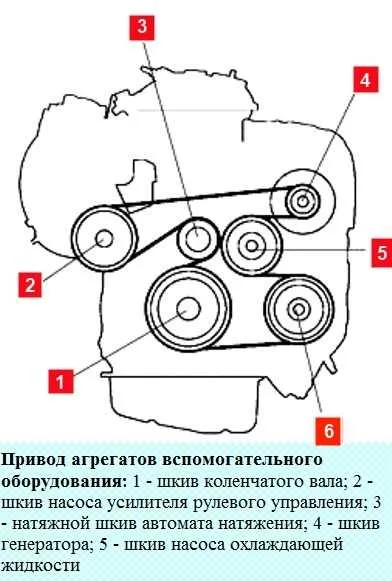
Release tension from the serpentine belt by using a wrench or a serpentine belt tool on the tensioner pulley. Move the tensioner slowly to avoid sudden spring release, and hold it while removing the belt.
Note the belt routing before removal. Use a diagram or take a clear photo of the belt path around the alternator, power steering pump, water pump, and crankshaft pulley to ensure correct installation.
Remove the belt from the pulleys one at a time, starting with accessories that are easiest to access. Carefully slide the belt off each pulley, avoiding bending it sharply, which can damage the fibers.
Inspect pulleys and tensioner for wear, damage, or misalignment. Check for smooth rotation, unusual noise, and proper alignment. Replace any components that show signs of wear to prevent premature belt failure.
Install the new belt by following the original routing. Loop the belt around the crankshaft pulley first, then work through the accessories according to the diagram, leaving the tensioner pulley for last.
Apply tension by slowly releasing the tensioner onto the new belt. Ensure the belt seats correctly in all pulley grooves and that there is no twisting or misalignment.
Double-check alignment and tension. Rotate the engine manually using a wrench on the crankshaft pulley for two full revolutions. Confirm that the belt tracks properly on all pulleys without slipping or rubbing edges.
Start the engine and observe the belt under operation. Listen for unusual noises and visually inspect for consistent tracking. Make final adjustments if necessary to maintain proper tension and alignment.