Detailed Diagram Showing Belt Routing and Components for 2006 Nissan Altima Engine Setup
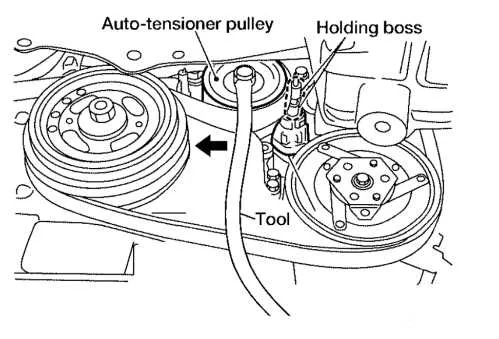
Locate the serpentine belt routing quickly using this detailed diagram for the 2006 Nissan Altima. Correct belt installation ensures smooth operation of the alternator, power steering pump, and air conditioning compressor. Follow the exact path shown to avoid misalignment and premature wear.
The diagram clearly outlines the belt’s path around each pulley, including the crankshaft, idler, tensioner, and accessory components. Pay close attention to the tensioner position to maintain proper belt tension and prevent slipping. This visual guide supports both routine maintenance and replacement tasks.
For models equipped with different engine configurations, the diagram adjusts to reflect variations in pulley placement and accessory layout. Cross-reference your engine type with the appropriate belt routing to maintain optimal performance and extend component life.
2006 Nissan Altima Belt Diagram
The 2006 Nissan Altima uses a serpentine belt system to drive multiple engine accessories. This single belt powers the alternator, power steering pump, air conditioning compressor, and water pump (for V6 models). Correct routing is key to maintaining proper tension and function.
Here’s the typical belt routing for the 2.5L 4-cylinder engine:
- Start at the crankshaft pulley (bottom center)
- Wrap upward around the alternator (top left)
- Pass down to the water pump pulley (middle left)
- Go around the power steering pump pulley (middle right)
- Wrap over the tensioner pulley (bottom right)
- Return to the crankshaft pulley
For the 3.5L V6 engine, the belt layout includes the air conditioning compressor and a slightly different path:
- Begin at the crankshaft pulley
- Wrap around the air conditioning compressor (bottom left)
- Move up to the power steering pump pulley (middle left)
- Go around the alternator pulley (top right)
- Pass over the tensioner pulley (bottom right)
- Circle the idler pulley if equipped
- Return to the crankshaft pulley
To ensure proper installation:
- Check the belt for cracks or fraying before installation.
- Refer to the engine-specific diagram printed on the underside of the hood or in the owner’s manual.
- Use a belt tensioner tool to relieve tension when removing or installing the belt.
- Verify all pulleys spin freely and are properly aligned.
- After installation, start the engine and watch the belt for smooth operation without slipping or noise.
Following this routing and these steps guarantees smooth accessory operation and extends belt life.
Identifying Each Belt and Its Routing on 2006 Nissan Altima
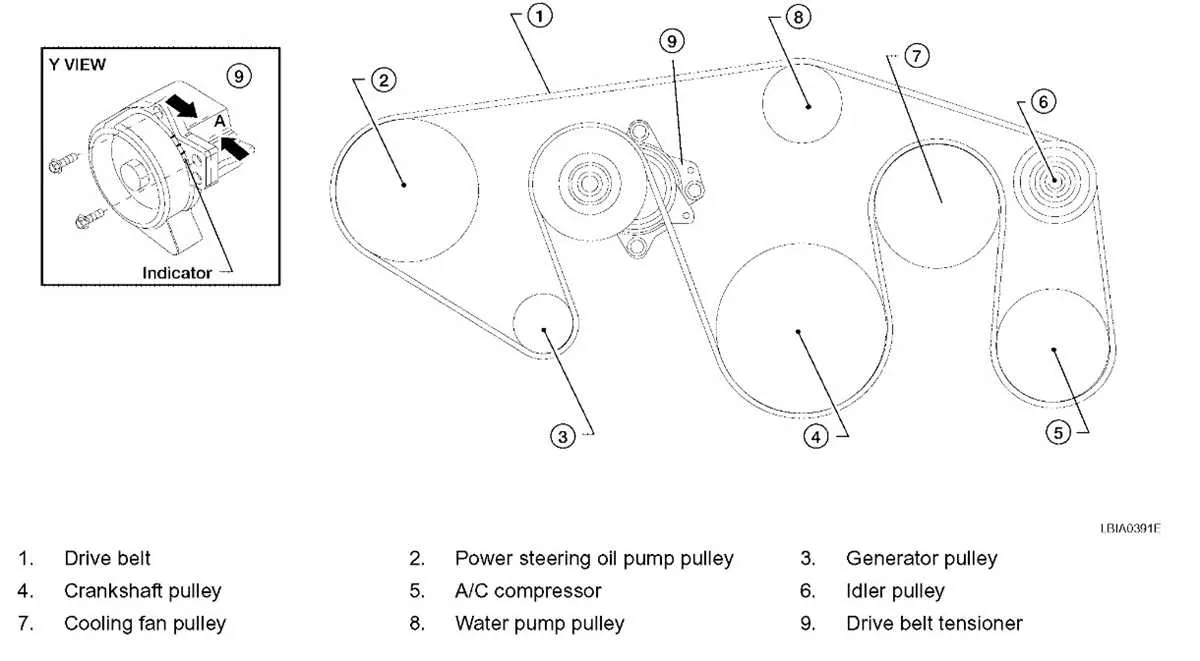
The 2006 Nissan Altima typically features two main belts: the serpentine belt and the timing belt. The serpentine belt drives multiple accessories including the alternator, power steering pump, and air conditioning compressor. The timing belt synchronizes the engine’s camshaft and crankshaft movements.
The serpentine belt routes around the crankshaft pulley, alternator, power steering pump, idler pulley, and tensioner pulley in a single continuous loop. On the 2.5L 4-cylinder engine, the belt path starts at the crankshaft pulley, moves up to the alternator, then across the tensioner, down to the power steering pump, and back to the crankshaft pulley. The 3.5L V6 engine’s routing is similar but includes the air conditioning compressor pulley in the loop.
The timing belt, hidden behind a protective cover, runs inside the engine and connects the crankshaft at the bottom to the camshafts at the top. It follows a precise path over the tensioner pulley and idler pulley to maintain correct timing. For the 2.5L engine, the timing belt also drives the water pump, which is essential to monitor during replacement to prevent future leaks.
Check the belt diagrams on the engine cover or the inside of the hood to verify correct routing. Using a detailed diagram specific to the engine type ensures accurate belt installation. Replace belts if they show cracks, fraying, or glazing to maintain optimal engine performance.
Step-by-Step Guide to Replacing the Serpentine Belt on a 2006 Nissan Altima
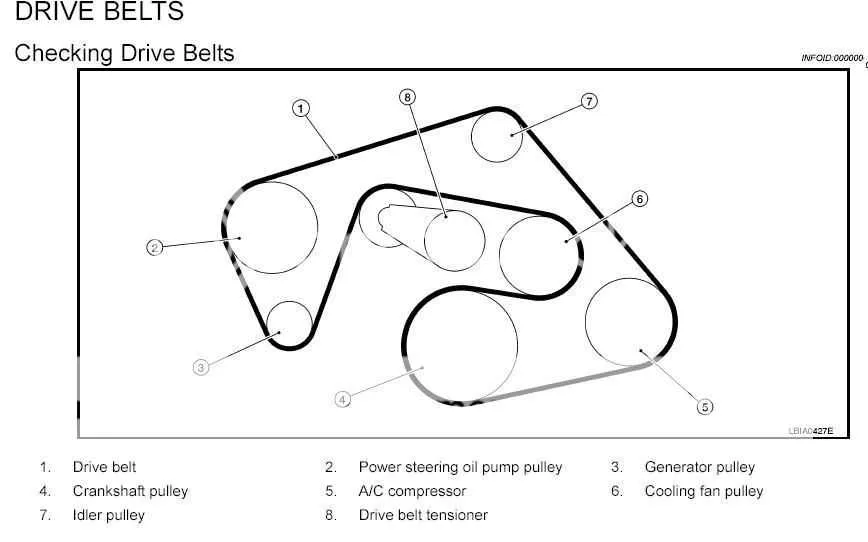
Locate the serpentine belt routing diagram under the hood or in the owner’s manual to confirm the belt path. This prevents incorrect installation and engine damage.
Use a wrench or serpentine belt tool to rotate the tensioner pulley clockwise, releasing tension on the belt. Carefully slide the belt off the pulleys while holding the tensioner in position.
Remove the old belt completely and compare it with the new one to ensure matching length and rib count.
Starting at the crankshaft pulley, route the new belt along the pulleys following the diagram exactly. Avoid twisting the belt during installation.
Once positioned, release the tensioner slowly to apply pressure on the new belt, securing it tightly on all pulleys.
Double-check the belt alignment and tension by spinning the pulleys manually. The belt should sit firmly without slack or misalignment.
Start the engine and listen for unusual noises; a properly installed serpentine belt runs quietly without slipping or squealing.
Reinspect the belt after a short test drive to confirm it remains secure and correctly seated on all pulleys.
Troubleshooting Common Belt Issues Using the 2006 Nissan Altima Diagram
Refer directly to the belt diagram to identify each belt’s routing and component connection points. Check for visible signs of wear such as cracks, fraying, or glazing on the serpentine and timing belts. Use the diagram to confirm the exact belt path and ensure proper alignment on all pulleys, including the alternator, water pump, power steering pump, and crankshaft.
If the belt slips or squeals, verify tension by locating the tensioner on the diagram. Adjust or replace the tensioner pulley if it shows excessive play or wear. The diagram also helps isolate the specific belt if your Altima has multiple belts, avoiding confusion during replacement.
Look for oil or coolant contamination on the belts, which causes rapid deterioration. The diagram reveals the proximity of these fluids’ sources, making it easier to inspect potential leaks from nearby components. Replace contaminated belts immediately to prevent failure.
For noise issues, use the diagram to inspect each pulley’s alignment. Misaligned pulleys cause uneven wear and noise. Rotate each pulley by hand to detect roughness or wobble. Replace any pulley bearings that feel gritty or loose.
When replacing belts, follow the diagram to route the new belt correctly. Incorrect routing leads to poor performance and potential engine damage. Double-check routing with the diagram before finalizing installation, ensuring all belts sit properly within their grooves.