Ford 6.0 serpentine belt diagram with routing details and pulley placement guide
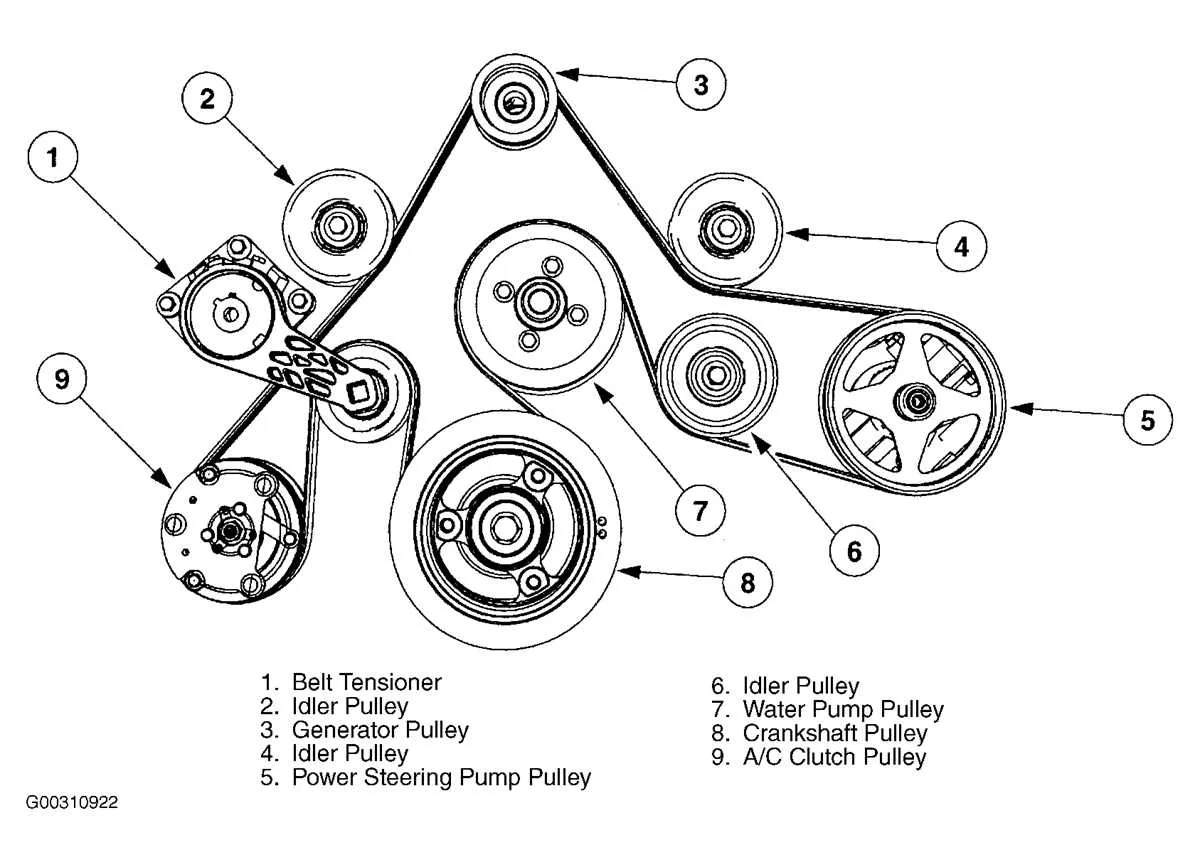
Check the belt routing before loosening any component. On the Ford 6.0 Powerstroke, the serpentine belt connects the alternator, power steering pump, A/C compressor, water pump, and tensioner in a single continuous loop. A clear diagram saves time during replacement and prevents misalignment that could damage pulleys or accessories.
The standard configuration uses a spring-loaded tensioner located on the passenger side. To remove the belt, place a ½-inch drive breaker bar into the tensioner slot and rotate it clockwise. This releases enough slack to slide the belt off the pulleys safely. Always inspect the tensioner and idler pulleys for wear during this process.
When installing the new belt, align it with the grooves on each ribbed pulley and confirm it sits flush before releasing the tensioner. An incorrect fit may cause squealing, premature wear, or even complete belt failure. Keeping a printed diagram in the engine bay or tool kit ensures quick reference during roadside repairs.
Ford 6.0 Serpentine Belt Diagram
Place the serpentine belt so it wraps around the crankshaft pulley first, then route it under the water pump and up around the alternator. Keep the smooth side of the belt aligned with smooth pulleys and the ribbed side with grooved pulleys.
Guide the belt across the power steering pump, then move it around the tensioner. Make sure the belt runs over the idler pulley before finishing at the air conditioning compressor. Double-check each pulley alignment to prevent slippage or premature wear.
Use a ½-inch drive ratchet on the tensioner to relieve pressure during installation. After the belt is seated, release the tensioner slowly so the belt tightens evenly across all pulleys. A quick check of belt tension and alignment ensures proper operation and avoids noise issues.
Correct Routing of the Ford 6.0 Serpentine Belt
Place the belt over the crankshaft pulley first, since it drives all other accessories. Continue by guiding it around the water pump pulley and then loop it over the alternator. From there, run the belt across the power steering pump and align it with the A/C compressor pulley. Route it down toward the idler pulleys, keeping the grooves seated properly in each track.
Before locking the tensioner, verify that every rib sits flush in the pulley grooves. Misalignment often causes squealing or premature wear. Apply steady pressure on the tensioner with the proper tool, slide the belt into place, and release carefully to secure tension. Spin each pulley by hand to confirm free movement and proper tracking.
Check clearance near the fan shroud and hoses, since a twisted belt edge can rub and shred quickly. A quick flashlight inspection helps confirm clean alignment. A correct path ensures consistent cooling, stable alternator output, and smooth operation of all driven components.
Identifying Tensioner and Pulley Locations on the Diagram
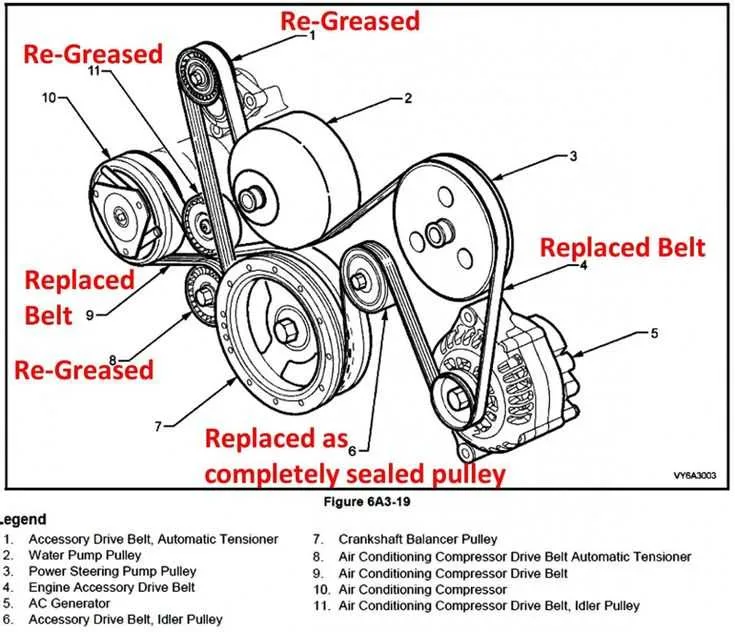
Locate the tensioner first, as it controls belt pressure. On the Ford 6.0, the tensioner sits near the top right of the belt path and has a smooth pulley surface. Use a 1/2-inch breaker bar or ratchet in the square slot of the tensioner arm to relieve tension before removing or installing the belt.
Next, identify each pulley type by its contact surface:
- Alternator pulley: Positioned at the upper center, grooved surface for the ribbed side of the belt.
- Power steering pulley: Found on the upper left, also grooved, connecting directly to the steering pump shaft.
- Idler pulleys: Smooth-surfaced and placed along the belt route only to guide direction, not to drive components.
- A/C compressor pulley: Located low on the passenger side, grooved, engaging the compressor clutch.
- Crankshaft pulley: At the bottom center, largest in diameter, grooved for the main drive rotation.
- Water pump pulley: Center-front, smooth surface, rotated by the back side of the belt.
Check alignment carefully. A misrouted belt often shows by the ribbed side riding on a smooth pulley or slipping across grooves. Following the diagram precisely avoids noise, slippage, or premature wear.
Steps for Replacing the Serpentine Belt Using the Diagram
Park the truck on a level surface, switch off the engine, and disconnect the negative battery cable to avoid accidental starts.
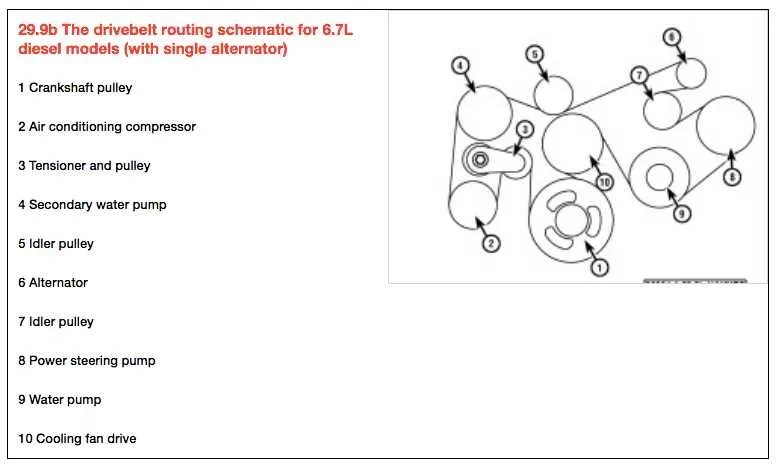
Locate the serpentine belt routing diagram placed on the fan shroud or refer to a printed copy for quick access. Keep it nearby to verify pulley positions during installation.
Use a ½-inch breaker bar or serpentine belt tool to rotate the tensioner clockwise. This releases tension and allows the old belt to slide off easily. Take note of how the belt loops around each pulley before removing it completely.
Inspect all pulleys for wear, alignment, and smooth rotation. Replace any pulley that shows cracks, chips, or excessive wobble, as these issues shorten the lifespan of the new belt.
Route the new belt according to the diagram, beginning at the crankshaft pulley and working upward. Leave the tensioner pulley for last, which makes the process smoother.
Rotate the tensioner again, slide the belt over the final pulley, and slowly release pressure to secure proper tension. Double-check every groove to confirm the belt sits flush and aligned.
Reconnect the battery cable, start the engine, and watch the belt for steady motion without squeaks or slippage. Shut off the engine and recheck alignment if needed.