John Deere LA110 belt diagram with routing details for mower deck and drive system
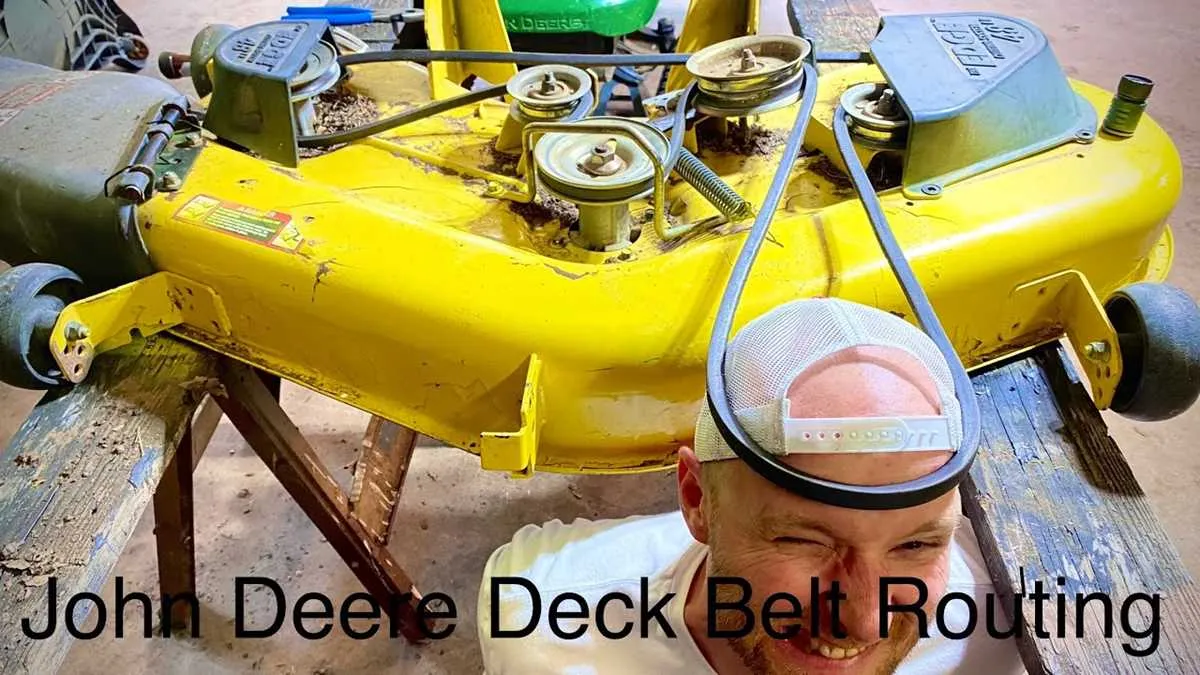
Use the correct belt diagram for the John Deere LA110 to avoid uneven cutting and premature wear. The diagram clearly shows the path of the mower deck belt, including pulleys, idlers, and tensioners, which ensures precise installation. Following the correct routing keeps the deck running smoothly and prevents costly breakdowns.
The LA110 model uses a deck drive belt that connects the engine pulley with the deck spindles. Correct positioning allows consistent blade speed and cleaner cuts. A common mistake is crossing the belt over the wrong pulley, which can cause the blades to spin in reverse or the belt to slip off during mowing. Checking the diagram before installation saves time and prevents repeated adjustments.
Before installing the belt, inspect each pulley for debris, wear, or sharp edges. Clean the deck housing and verify that the spring-loaded tensioner moves freely. Place the belt around the engine pulley first, then guide it across the idler pulleys according to the diagram. Finish by sliding it onto the deck spindles and engaging the tensioner arm. This sequence matches the illustrated routing and ensures proper tension from the start.
Keeping the John Deere LA110 belt system in good condition requires routine inspection. Replace the belt if you notice cracks, fraying, or glazing on the surface. Using the diagram during every replacement guarantees consistent alignment and extends the mower’s lifespan. A correctly routed belt not only improves performance but also reduces strain on the engine and deck components.
John Deere LA110 Belt Diagram
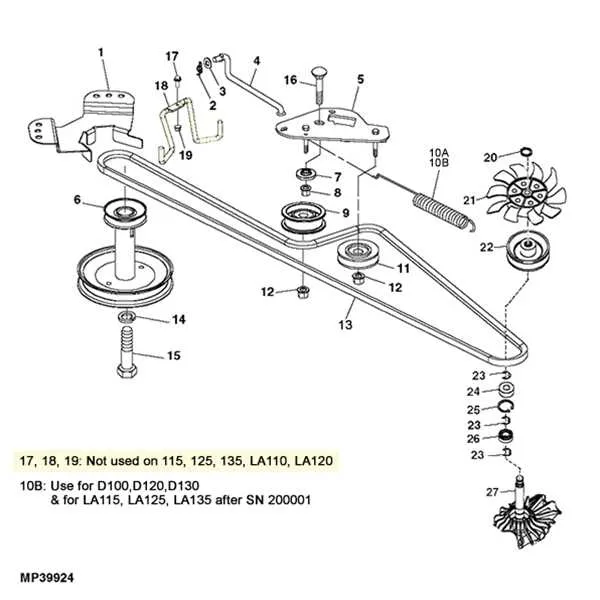
Check the routing of the mower deck belt before replacement to avoid mistakes during reassembly. The John Deere LA110 uses a deck drive belt that connects the engine pulley to the deck pulleys, transferring power to the blades. Following the correct path ensures smooth blade rotation and prevents belt wear.
- The belt leaves the engine drive pulley and runs directly to the deck idler pulley on the right side.
- From the idler, it loops around the spindle pulley located on the right blade.
- It then passes across to the left spindle pulley.
- Next, the belt runs around the tensioner pulley, which maintains proper tension.
- Finally, it returns to the engine pulley, completing the loop.
Always release the deck tension spring before removing the old belt to prevent damage. Use a clean rag to wipe debris from pulleys and check bearings for smooth rotation. When installing the new belt, verify that it sits fully in each pulley groove without twists. After installation, engage and disengage the blades a few times with the engine off to confirm proper alignment before mowing.
- Lower the deck to its lowest cutting height.
- Disconnect the spark plug for safety.
- Remove the belt guards and release the tension spring.
- Take off the old belt following the routing sequence in reverse.
- Install the new belt following the diagram path exactly.
- Reattach the guards, reconnect the spark plug, and test the blades.
Locating the Correct Belt Path for John Deere LA110
Place the mower on a flat surface and lower the deck fully to gain a clear view of the pulleys. Position the belt around the engine pulley first, making sure it sits firmly in the groove without twists.
Route the belt along the deck pulleys by following the factory pattern: from the engine pulley to the deck idler, then around the spindle pulleys on each side. Keep the flat side of the belt against idler pulleys and the V-side into spindle pulleys for proper grip.
Check that the spring-loaded idler arm applies tension evenly across the belt. A loose or misaligned belt will slip and reduce cutting performance. Rotate the pulleys by hand to confirm smooth movement and correct alignment before starting the engine.
Secure all covers and brackets once the belt sits properly. This prevents debris from entering the pulley area and ensures the belt maintains its correct path during operation.
Step-by-Step Guide to Installing the Deck Drive Belt
Disconnect the spark plug wire to prevent accidental engine start. Park the mower on a flat surface and set the parking brake firmly.
Lower the mower deck to its lowest position. Remove the deck by detaching the cotter pins and washers that secure the suspension arms and lift links. Slide the deck out from under the tractor.
Release belt tension by pulling the idler arm back. Take off the old belt from the engine pulley, deck pulleys, and idler pulleys. Check each pulley for wear or debris before installing the new belt.
Route the new belt around the engine pulley first, then follow the John Deere LA110 belt diagram to guide it through the deck pulleys. Make sure the V-side of the belt fits into the pulley grooves while the flat side runs along idlers.
Apply tension by releasing the idler arm slowly so it presses against the belt. Verify the belt is centered on every pulley and sits evenly without twists.
Slide the deck back under the tractor, reconnect the suspension arms and lift links, then secure them with cotter pins and washers. Raise and lower the deck to confirm free movement.
Reconnect the spark plug wire. Start the mower, engage the blades, and observe belt tracking. If the belt runs smoothly and stays in place, the installation is complete.
Troubleshooting Common Belt Alignment Issues
Check the belt tension first. A loose belt often slips off the pulleys, while an overly tight one strains the bearings. Adjust the idler pulley until the belt moves firmly but without excessive resistance.
Inspect each pulley for uneven wear. A pulley with sharp edges or grooves pushes the belt sideways and causes misalignment. Replace any pulley that no longer has a smooth, rounded surface.
Clean the deck regularly. Grass buildup near the spindle housings shifts the belt’s path and makes it ride incorrectly. Scrape away debris and ensure all pulleys spin freely without wobbling.
Confirm that the belt follows the diagram exactly. Routing it over the wrong side of an idler or twisting it before installation leads to immediate tracking issues. Always compare the installation with the original diagram before tightening the deck back in place.
Examine the belt itself. Frayed edges, glazing, or cracks indicate it no longer tracks straight. Installing a fresh belt prevents repeated misalignment after adjustments.