2011 Ford F250 Serpentine Belt Routing and Component Layout Diagram Guide
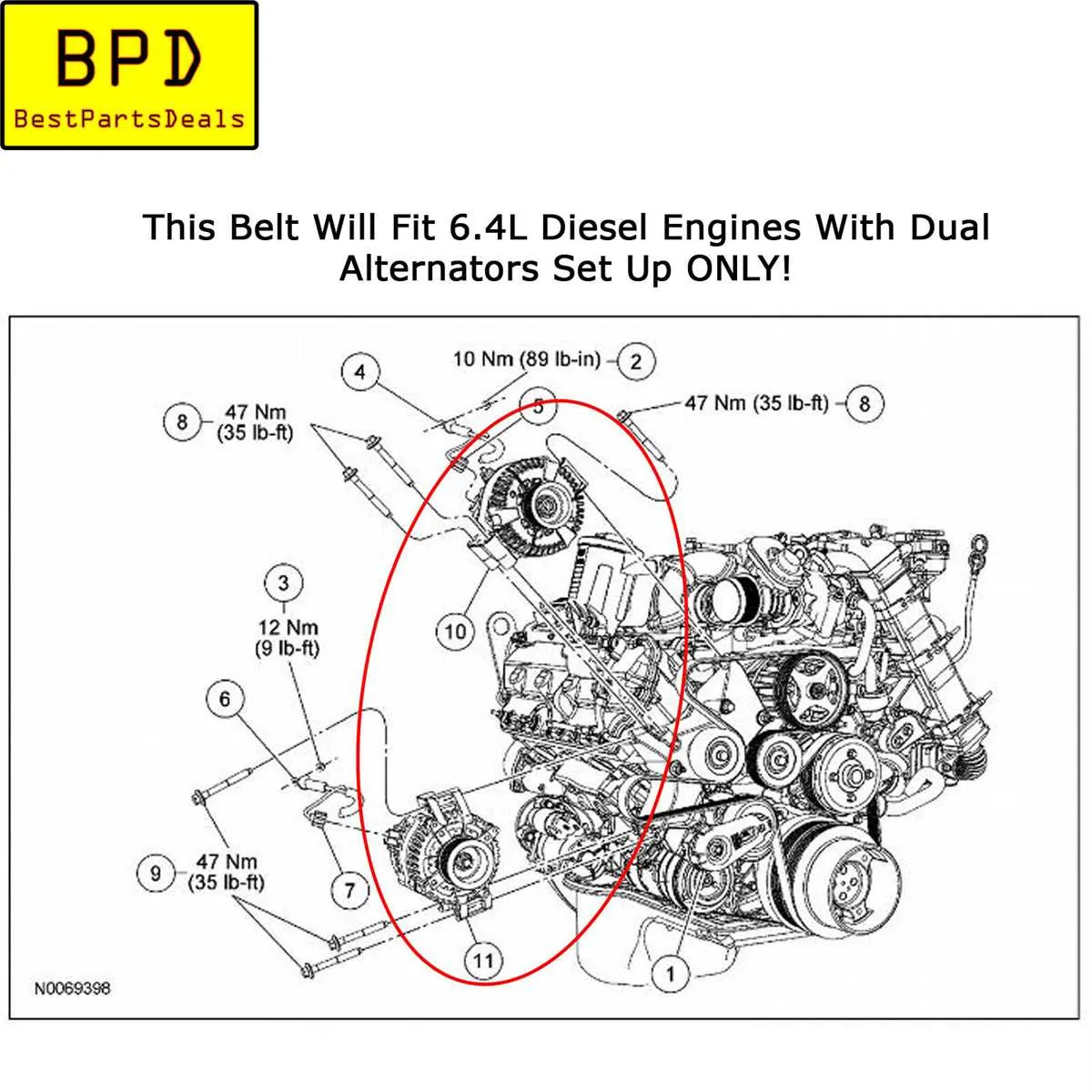
Locate the serpentine belt routing on your 2011 Ford F250 quickly by referring to the specific diagram designed for this model. The belt wraps around key components including the alternator, power steering pump, air conditioning compressor, and crankshaft pulley, ensuring synchronized operation. Correct installation prevents slipping and premature wear.
Use the factory diagram to match the belt’s path exactly, avoiding misalignment that could cause engine damage or accessory failure. Pay attention to tensioner placement, which maintains proper belt tension and reduces noise. Replacing the belt with the correct routing boosts engine performance and extends belt lifespan.
If the original diagram is missing, consult the under-hood decal or reliable repair manuals for a detailed layout. Double-check all pulleys for smooth rotation before installing the new belt to prevent unnecessary strain. Following these steps guarantees a smooth and reliable serpentine belt system on your 2011 F250.
2011 F250 Serpentine Belt Diagram
Use the correct serpentine belt routing based on your engine type. For the 2011 Ford F-250 with the 6.2L V8 gas engine, the belt wraps around the following components in this order: crankshaft pulley → A/C compressor → idler pulley → power steering pump → water pump → alternator → tensioner pulley → back to crankshaft. Always route the ribbed side of the belt along grooved pulleys and the smooth side against flat pulleys.
If your F-250 has the 6.7L Power Stroke diesel engine, the layout differs. The belt travels from the crankshaft → fan pulley → A/C compressor → idler → alternator → water pump → secondary idler → tensioner → back to the crankshaft. Confirm pulley positions by checking the decal typically located on the fan shroud or radiator support.
Before installing a new belt, inspect all pulleys for wobble or wear. Spin each by hand and check for resistance or grinding. Always release tension from the belt tensioner using a breaker bar or serpentine belt tool before removal or installation. After installation, start the engine and visually confirm correct tracking across all pulleys.
Locating and Identifying Serpentine Belt Components on 2011 F250
Begin at the front of the engine bay with the hood raised and secured. The serpentine belt is routed around several pulleys connected to key components. Look slightly below the alternator on the passenger side – this is where the belt tensioner sits. It has a smooth pulley and a square hole for a 3/8″ or 1/2″ ratchet, depending on the engine type.
To the left of the tensioner, locate the alternator with its ribbed pulley. Just below it, find the power steering pump. On 6.2L gas engines, the A/C compressor is mounted low on the passenger side, accessible from underneath or through the wheel well. On diesel models, it’s slightly more centered.
Follow the belt path toward the driver’s side to identify the crankshaft pulley – the largest one at the bottom. Above it, the idler pulley keeps tension balanced. Look slightly higher for the water pump, which often shares a pulley with the fan clutch. Each pulley surface helps confirm belt alignment: ribbed pulleys contact the grooved side of the belt, while smooth pulleys contact the back.
Use the factory belt routing diagram, usually on a decal near the radiator support or fan shroud, to confirm each component’s placement. If the label is missing, refer to the service manual specific to your engine – 6.2L gas or 6.7L Power Stroke diesel – as routing differs slightly between them.
Step-by-Step Guide to Reading the 2011 F250 Serpentine Belt Diagram
Locate the belt routing diagram sticker under the hood–typically placed on the radiator support or fan shroud. If it’s missing, refer to a verified diagram specific to your engine type: 6.2L V8, 6.7L Power Stroke Diesel, or 6.8L V10.
Identify each pulley: Look for the crankshaft pulley (largest, at the bottom center), the alternator (top left or right), the power steering pump, A/C compressor, tensioner, and idler pulleys. Each engine configuration positions these slightly differently, so matching your engine is key.
Follow the belt path precisely: Begin at the crankshaft and trace the belt through the rest of the components. The belt must wrap over and under pulleys as shown–arrows and dashed lines indicate direction and ribbed vs. smooth sides.
Check the tensioner last. This spring-loaded pulley maintains belt tension and usually requires a 1/2-inch drive ratchet to rotate. Verify that the belt sits flush in each pulley groove before releasing the tensioner.
Misrouting can cause accessory failure or damage. If unsure, cross-reference with a factory service manual or trusted parts source.
Troubleshooting Common Issues Using the 2011 F250 Serpentine Belt Diagram
Check belt routing first. If the belt jumps a pulley or twists, compare its path with the 2011 F250 serpentine belt diagram. Misalignment causes squealing, premature wear, and accessory failure.
- Squealing noise: Inspect tensioner alignment and pulley surfaces. A weak tensioner won’t hold pressure. Match the diagram to confirm correct belt tension path.
- Overheating: Verify the water pump pulley connects properly in the diagram. If the belt slips or bypasses it, coolant won’t circulate as needed.
- Dead battery: Ensure the belt runs over the alternator as shown. A skipped alternator pulley leads to charging issues and warning lights.
- Power steering loss: Locate the power steering pump in the diagram. If the belt isn’t seated correctly, steering becomes heavy or unresponsive.
Replace cracked or glazed belts. Use the diagram when reinstalling a new belt to avoid routing errors. Always route the belt around smooth pulleys (non-ribbed side) and grooved pulleys (ribbed side) as shown.
If issues persist after checking alignment and tension, inspect each accessory pulley. Use the diagram to isolate each component. A seized idler or tensioner pulley often mimics belt failure.